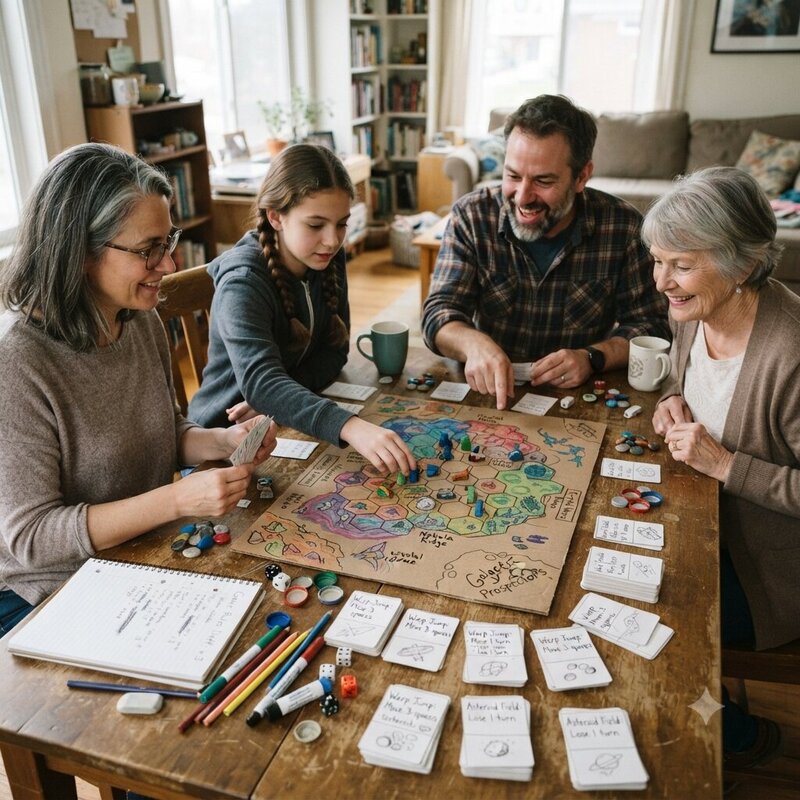
Start with paper prototypes using index cards and basic tokens rather than polished components, since spending time on art or fancy pieces before the core mechanics are proven wastes effort on a game that might still need major changes. Playtest with people outside your immediate circle as early as possible, since friends and family often give overly polite feedback, while strangers point out confusing rules or dull stretches you would otherwise miss. Write the rules down fully before your first playtest rather than explaining them verbally as you go, since ambiguities that seem obvious in your head are often the exact spots where players get confused or find loopholes. Time how long a full game actually takes to play, since designers consistently underestimate playtime, and a game that runs much longer than the box promises frustrates players even if the mechanics themselves are solid. Cut mechanics that only exist to fix problems caused by other mechanics, since games that grow more complex to patch earlier design flaws usually play better once you remove both the problem and the patch and rework the core system instead. Watch players' faces and body language during playtesting rather than only listening to what they say afterward, since confusion, boredom, or frustration often show up during play long before a player is willing to voice it out loud.