Suggest a new activity

This site is protected by reCAPTCHA and the Google Privacy Policy and Terms of Service apply.

Report a bug

Optional, 1 image up to 5 MB.

This site is protected by reCAPTCHA and the Google Privacy Policy and Terms of Service apply.

Report an error in this activity

This site is protected by reCAPTCHA and the Google Privacy Policy and Terms of Service apply.

Mead Making

Mead Making

Min number of participants 2
Age 18+ yrs.
Safety support Not required
Min duration 1 h
Cost Low
Environment Indoor

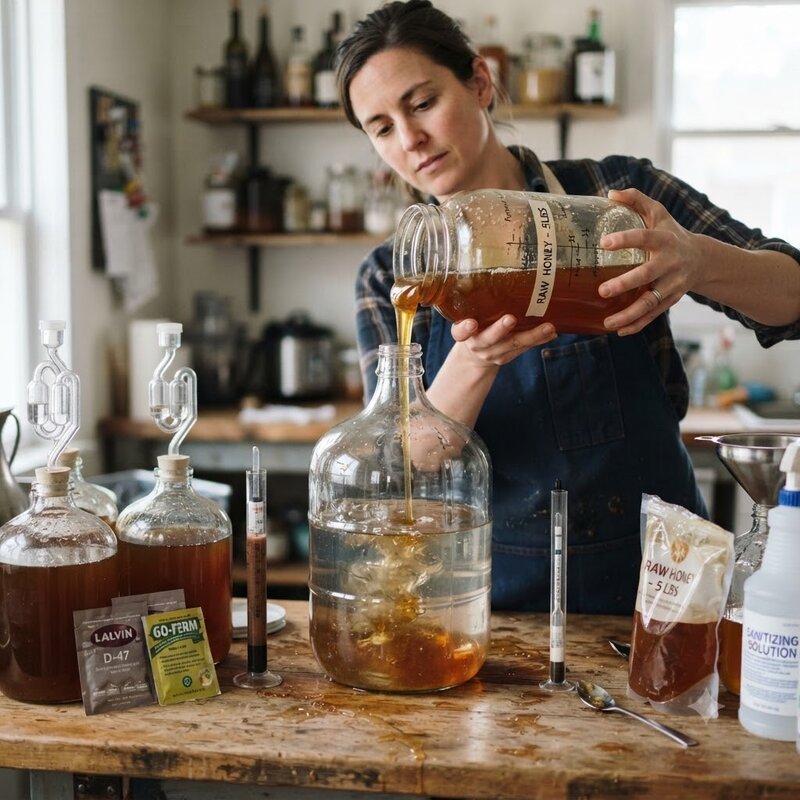
Ferment raw honey with water and yeast to create ancient honey wine, then infuse your batch with fruit, spices, or herbs to craft a personalised mead that will be ready to share in a few weeks.
The Essentials

Steps

  1. Sanitize all equipment thoroughly before starting, since any stray bacteria or wild yeast can spoil the batch.
  2. Mix honey with water in your fermenter, typically a ratio of about 3 pounds of honey per gallon of water for a standard-strength mead.
  3. Add yeast nutrient and pitch your chosen wine or mead yeast once the must has cooled to room temperature.
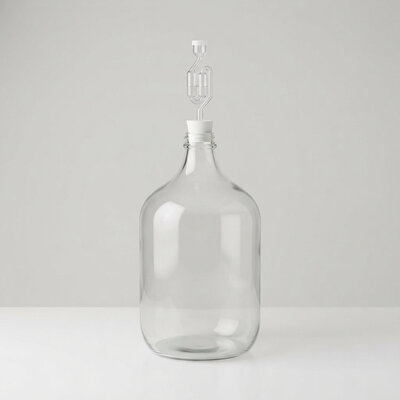
  4. Seal the fermenter with an airlock and store it somewhere dark and temperature-stable, typically 60-75°F (15-24°C).
  5. Let primary fermentation run for 2-4 weeks until bubbling in the airlock slows significantly, then rack the mead off the sediment into a clean vessel.
  6. Age the mead for at least a few months, tasting periodically, since flavors mellow and integrate significantly over time.

Tips

  • Use raw, unpasteurized honey when possible, since pasteurized honey may lack some of the natural yeast-friendly compounds that support fermentation.
  • Take a hydrometer reading before pitching yeast and again after fermentation slows, since this tells you exactly how much sugar converted to alcohol.
  • Be patient: mead often tastes harsh or overly sweet young, but improves dramatically with 6-12 months of aging.
  • Keep detailed notes on honey variety, yeast strain, and nutrient additions, since honey character varies enormously and this helps you replicate successes.
  • Rack the mead off sediment (lees) at least once during aging to prevent off-flavors from developing.

What You Need

Activities

Similar activities (see all)

Report an error in this activity

This site is protected by reCAPTCHA and the Google Privacy Policy and Terms of Service apply.

Vinegar Making

Vinegar Making

Fermenting wine, cider, or beer with a live vinegar mother to slowly produce flavoured artisan vinegars at home — a meditative long-term project that turns leftovers into something remarkable.

Report an error in this activity

This site is protected by reCAPTCHA and the Google Privacy Policy and Terms of Service apply.

Family Recipe Book

Family Recipe Book

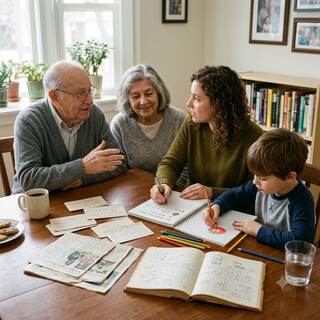
Interview grandparents and relatives for their favourite recipes, write them up with drawings, and bind them into a family cookbook — a heritage project that preserves stories alongside ingredients and becomes a lifelong keepsake.

Report an error in this activity

This site is protected by reCAPTCHA and the Google Privacy Policy and Terms of Service apply.

Origami Together

Origami Together

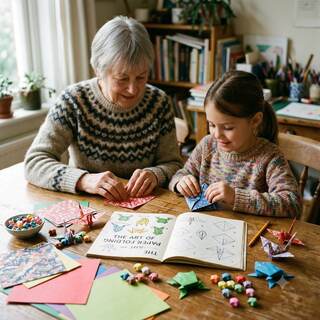
Fold paper cranes, jumping frogs, and lucky stars following step-by-step diagrams — an ancient Japanese art that needs only square paper, builds fine motor skills, and rewards patience with satisfying three-dimensional results.