Suggest a new activity

This site is protected by reCAPTCHA and the Google Privacy Policy and Terms of Service apply.

Report a bug

Optional, 1 image up to 5 MB.

This site is protected by reCAPTCHA and the Google Privacy Policy and Terms of Service apply.

Report an error in this activity

This site is protected by reCAPTCHA and the Google Privacy Policy and Terms of Service apply.

Olive Oil Tasting

Olive Oil Tasting

Min number of participants 1
Age 14+ yrs.
Safety support by adult Not required
Min duration 30 min.
Cost Medium
Environment Indoor / Outdoor

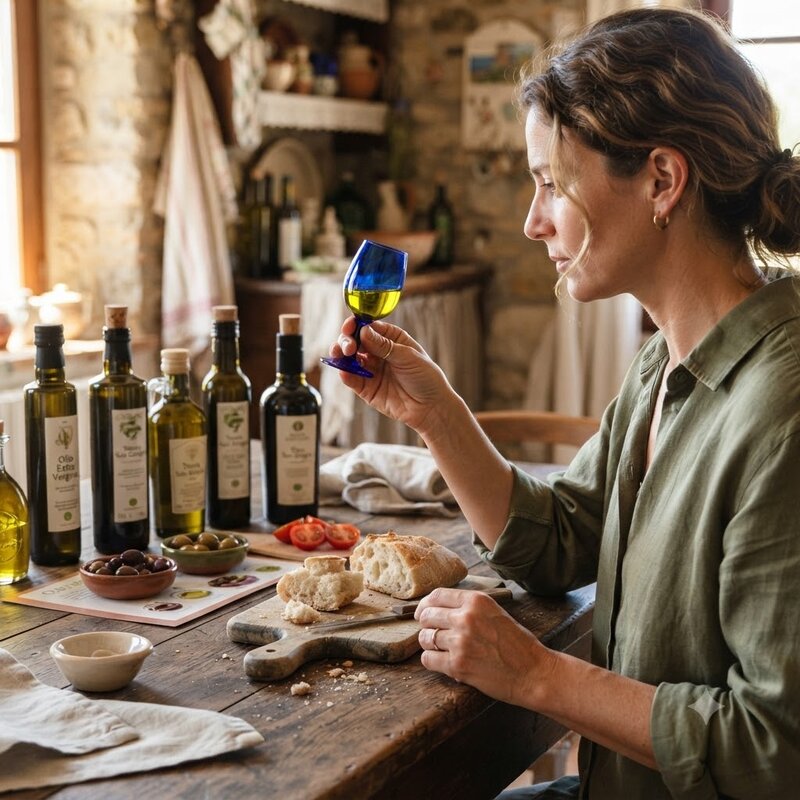
Pour extra-virgin oils from different regions into small cups, sniff, sip, and compare — bitterness, pungency, fruitiness, and freshness reveal how much variety hides behind a single bottle label.


The Essentials

Steps

  1. Pour a small amount of oil into a dark tasting glass and cup it in your hand to warm it to around body temperature, since warming releases the oil's aromatic compounds.
  2. Cover the glass with your other hand or a small lid and swirl gently, then remove the cover and inhale deeply, noting the aroma before you taste (fruity, grassy, nutty, etc.).
  3. Take a small sip and pull air through your lips across the oil in your mouth ("strippaggio"), which aerates the oil and spreads it across your palate to release more flavor.
  4. Note the initial taste, the sensation partway through, and the finish separately, since good extra virgin olive oil evolves in flavor as you taste it rather than staying static.
  5. Pay attention to the peppery, throat-catching sensation at the back of the throat, since this bitterness and pungency (from polyphenols) is a hallmark of fresh, high-quality extra virgin oil, not a flaw.
  6. Cleanse your palate with a plain cracker or slice of green apple and water between different oils, since tasting several oils in a row without a palate cleanser blurs the differences between them.

Tips

  • Taste oils at room temperature rather than chilled or heated, since temperature extremes mute the aromatic compounds that carry most of an oil's character.
  • Compare at least two or three oils side by side rather than tasting one in isolation, since it's much easier to identify subtle differences in fruitiness, bitterness, and pungency through direct comparison.
  • Learn to recognize rancidity and mustiness as defects, not variations in style, since a musty, stale, or greasy-crayon smell means the oil is past its prime rather than simply mild.
  • Check the harvest date rather than relying on the "best by" date, since olive oil is a fresh product that degrades over time, and oils tasted within a year of harvest are noticeably more vibrant.
  • Avoid tasting immediately after coffee, mint, or strongly flavored foods, since these dull your palate's ability to detect the subtler flavor notes in the oil.
Activities

Similar activities (see all)

Report an error in this activity

This site is protected by reCAPTCHA and the Google Privacy Policy and Terms of Service apply.

Simon (Electronic Memory Game)

Simon (Electronic Memory Game)

Watching and repeating an ever-growing sequence of colored lights and beeps on the classic four-button electronic gadget — a simple test of memory and focus that gets tougher round by round.

Report an error in this activity

This site is protected by reCAPTCHA and the Google Privacy Policy and Terms of Service apply.

Go

Go

An ancient Chinese two-player strategy game where black and white stones compete to surround more territory on the board — deceptively simple rules, virtually infinite depth.

Report an error in this activity

This site is protected by reCAPTCHA and the Google Privacy Policy and Terms of Service apply.

The Minister's Cat

The Minister's Cat

A word game where players take turns describing "the minister's cat" with an adjective starting with the current letter of the alphabet, advancing a letter each round until someone runs dry.