Suggest a new activity

This site is protected by reCAPTCHA and the Google Privacy Policy and Terms of Service apply.

Report a bug

Optional, 1 image up to 5 MB.

This site is protected by reCAPTCHA and the Google Privacy Policy and Terms of Service apply.

Report an error in this activity

This site is protected by reCAPTCHA and the Google Privacy Policy and Terms of Service apply.

Meat Smoking

Meat Smoking

Min number of participants 1
Age 14+ yrs.
Safety support by adult Recommended
Min duration 4 h
Cost Medium
Environment Outdoor

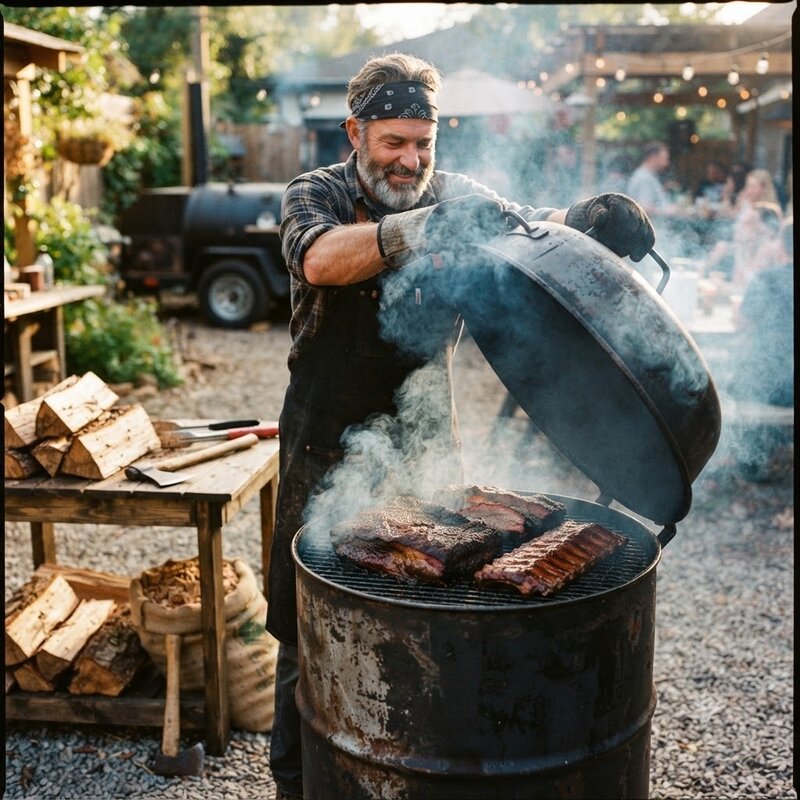
A low-and-slow outdoor ritual — packing brisket, ribs, or pork shoulder with a dry rub, then maintaining 225°F of fragrant hardwood smoke for eight to sixteen hours until the meat collapses into tender, bark-crusted magnificence.


The Essentials

Steps

  1. Choose a cut suited to smoking, such as brisket, pork shoulder, or ribs, since fattier cuts with connective tissue hold up better to long cook times.
  2. Apply a dry rub or brine several hours (or overnight) before smoking to season the meat and, for brines, help it retain moisture.
  3. Set up your smoker for indirect heat and preheat it to your target temperature, typically 225-250°F (107-121°C) for most low-and-slow smoking.
  4. Add your chosen wood chips or chunks and place the meat on the grate away from direct heat, positioning a water pan nearby to maintain humidity.
  5. Smoke until the meat reaches a safe internal temperature (check with a meat thermometer), maintaining consistent smoker temperature throughout.
  6. Let the meat rest for at least 15-30 minutes (longer for large cuts) after removing it from the smoker, since this allows juices to redistribute before slicing.

Tips

  • Use a reliable digital meat thermometer rather than judging doneness by time alone, since cook times vary with weather, wind, and the smoker itself.
  • Expect a stall in internal temperature partway through cooking large cuts like brisket; this is normal and resolves if you keep the heat steady.
  • Choose milder woods like apple or cherry for poultry and fish, and stronger woods like hickory or oak for beef and pork.
  • Maintain steady airflow and avoid opening the smoker too often, since each opening lets out heat and extends cook time significantly.
  • Keep a log of wood type, temperature, and cook time for each smoke, since this makes it much easier to replicate results you liked.
Activities

Similar activities (see all)

Report an error in this activity

This site is protected by reCAPTCHA and the Google Privacy Policy and Terms of Service apply.

Friendship Necklace Making

Friendship Necklace Making

String beads, charms, or knotted thread into a matching necklace to keep or give to a best friend — a simple, colorful craft that turns a handful of supplies into a lasting token of friendship.

Report an error in this activity

This site is protected by reCAPTCHA and the Google Privacy Policy and Terms of Service apply.

Urban Farming

Urban Farming

Grow food in the city — on rooftops, balconies, or shared community plots — converting forgotten urban spaces into productive gardens and reconnecting with how food is made.

Report an error in this activity

This site is protected by reCAPTCHA and the Google Privacy Policy and Terms of Service apply.

Urban Sketching

Urban Sketching

Sit in a public place — a café terrace, a busy market, a station concourse — and draw what you see in real time, capturing architecture, people, and atmosphere on the page before it changes — urban sketching trains observational accuracy and graphic spontaneity.