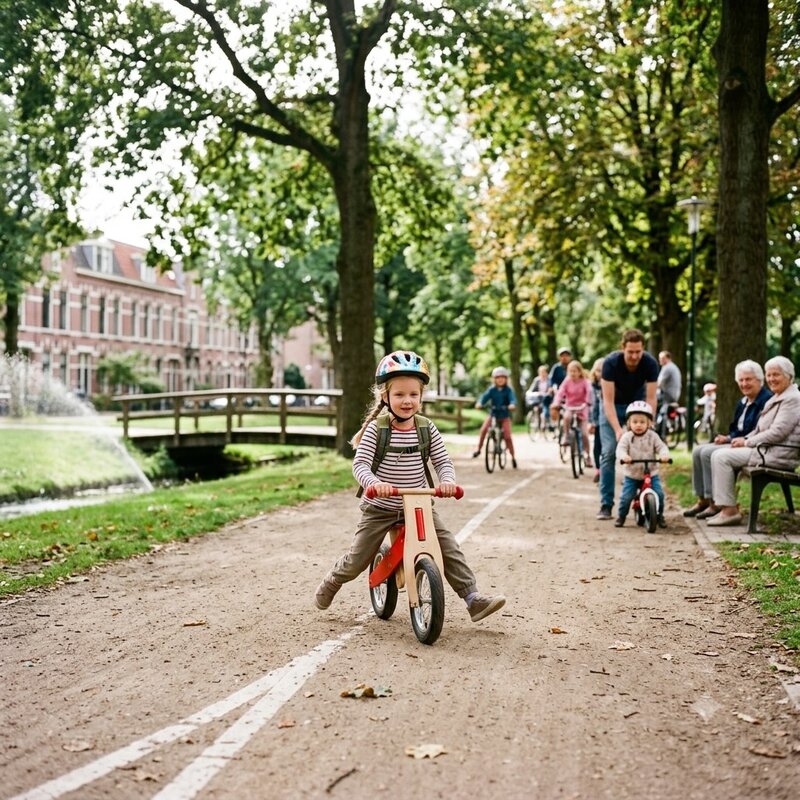
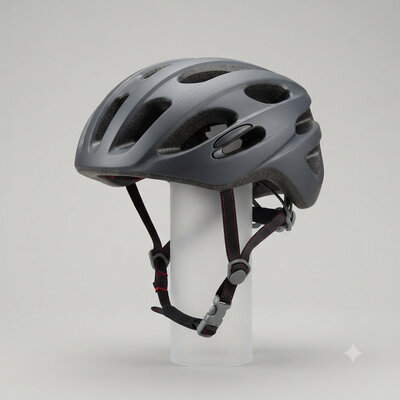
Set the seat height so your child's feet are flat on the ground with knees slightly bent while sitting, since a seat that is too high forces tiptoes and makes it hard to catch a fall, while one that is too low makes pushing off awkward. Start on a flat, smooth surface like a driveway or empty parking lot rather than grass or gravel, since a smooth surface lets the bike roll freely and helps your child feel the connection between pushing off and gliding. Let your child walk the bike first, then move to short pushes and glides, rather than rushing to long rides, since building up the glide gradually builds confidence without overwhelming a young rider. Always have your child wear a properly fitted helmet, since falls are common while learning and a helmet protects against head injury even at low speeds. Encourage looking ahead rather than down at the front wheel, since looking down throws off balance and makes steering wobbly. Once your child can glide with both feet up for a few seconds, introduce gentle turns and slight inclines, since these skills transfer directly to riding a pedal bike later.