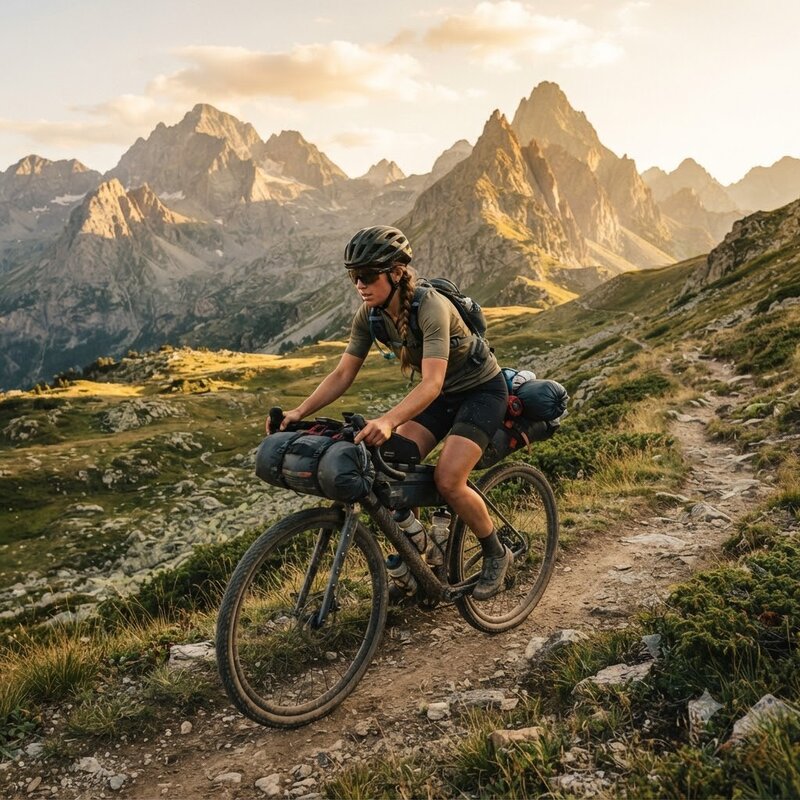
Distribute weight across frame, seat, and handlebar bags rather than piling everything into one large pack, since a bike loaded unevenly becomes noticeably harder to balance and handle on rough or technical terrain. Test your fully loaded setup on a short practice ride before departing on a longer trip, since gear that felt secure when packed at home can shift, rattle, or rub once the bike is actually moving over bumps and vibration. Pack your rain layer and any tools you might need mid-ride somewhere quickly accessible rather than buried at the bottom of a bag, since digging through fully packed bags on the side of a trail wastes time and exposes your gear to weather. Carry more water than you think you need and know where the next refill point is before setting out, since running low on water far from a town or trailhead is one of the most common ways a bikepacking trip turns dangerous. Practice basic repairs, like fixing a flat tire and adjusting brakes, before you leave, since bike shops are often hours away on remote routes and a simple mechanical issue can end a trip if you cannot fix it yourself. Choose a route with realistic daily mileage based on the terrain and your fitness rather than your usual road riding pace, since loaded bikes on unpaved or hilly routes are significantly slower than an unloaded bike on flat pavement.