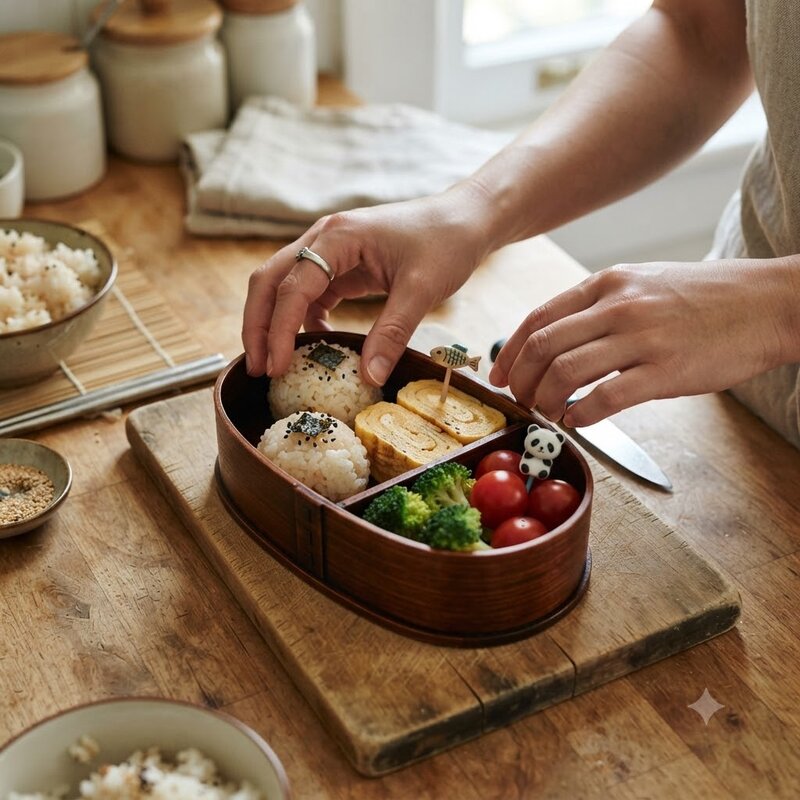
Cool rice and any cooked ingredients to room temperature before packing them into the box, since sealing warm food inside a closed container traps steam that turns into condensation and makes everything soggy by lunchtime. Pack food tightly against the walls of the box and against each other with little empty space, since loosely packed food shifts around during transport and turns a neat arrangement into a jumbled mess. Separate wet ingredients like sauces or dressed vegetables from dry ones using small dividers or silicone cups, since liquid that touches rice or crackers over several hours makes them mushy and unappetizing. Use only fully cooked, well-drained ingredients if the bento will sit unrefrigerated for more than an hour or two, since raw or undercooked food left at room temperature for an extended period is one of the most common causes of foodborne illness. Add antibacterial ingredients like a small umeboshi plum on top of the rice or a splash of vinegar in the rice itself, since these traditional additions genuinely slow bacterial growth in a lunch that won't be refrigerated until it's eaten. Balance color and food groups across the box, aiming for a base of rice or grains, a protein, and at least two vegetables, since a bento with only one or two colors usually signals a nutritionally unbalanced meal even before you check the ingredients.