Suggest a new activity

This site is protected by reCAPTCHA and the Google Privacy Policy and Terms of Service apply.

Report a bug

Optional, 1 image up to 5 MB.

This site is protected by reCAPTCHA and the Google Privacy Policy and Terms of Service apply.

Report an error in this activity

This site is protected by reCAPTCHA and the Google Privacy Policy and Terms of Service apply.

Obstacle Course Racing

Obstacle Course Racing

Min number of participants 1
Age 14+ yrs.
Safety support by adult Recommended
Min duration 1 h
Cost Medium
Environment Outdoor

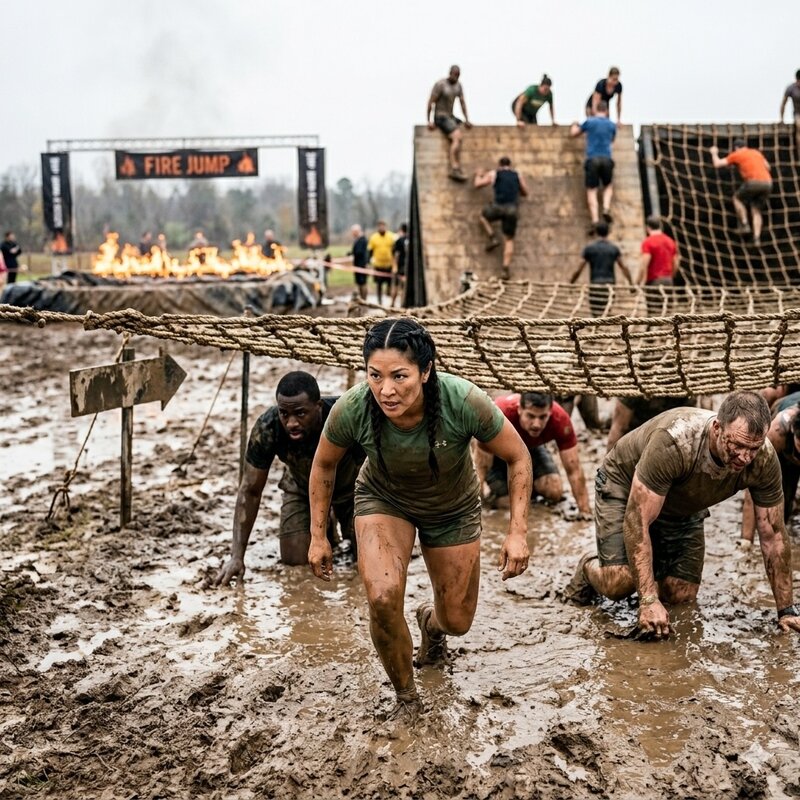
Compete across kilometres of mud, walls, fire, ice water, and cargo nets in events like Spartan Race or Tough Mudder — OCR is the ultimate test of functional fitness, combining running endurance with climbing, crawling, and carrying challenges.

The Essentials

Rules

  • Complete obstacles honestly or accept the designated penalty (extra burpees, a time penalty, or a penalty loop) if you fail one, since skipping an obstacle without the penalty disqualifies you from official results.
  • Follow the marked course exactly, since cutting corners or leaving the flagged route is treated the same as skipping an obstacle.
  • Wait your turn at bottlenecked obstacles rather than pushing past other racers, since obstacle course races are shared courses and safety depends on orderly queuing at chokepoints.
  • Help injured racers or alert course marshals if you see someone in real distress, since race safety norms expect this even mid-competition.

Tips

  • Train grip strength specifically, since obstacles like rope climbs, monkey bars, and hanging traverses fail more often due to weak grip than weak overall strength.
  • Practice running with fatigued arms (e.g., carrying weights partway through a run), since OCR uniquely combines upper-body obstacles with distance running, and arm fatigue affects your run pace more than most athletes expect.
  • Wear shoes with aggressive tread and good drainage, since OCR courses frequently include mud, water crossings, and wet obstacles that make standard running shoes dangerously slick.
  • Practice obstacle-specific techniques (like the correct grip and swing for a rope climb) rather than just general fitness, since raw strength alone often isn't enough without proper technique on technical obstacles.
  • Pace yourself conservatively on the running sections early in the race, since arriving at strength-based obstacles already fatigued from over-running the pace is one of the most common reasons racers fail obstacles late in a course.
Activities

Similar activities (see all)

Report an error in this activity

This site is protected by reCAPTCHA and the Google Privacy Policy and Terms of Service apply.

High risk
Canyoning

Canyoning

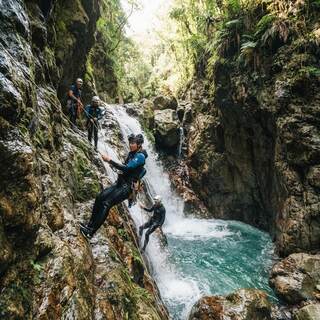
Follow a river through its carved gorge by swimming, jumping into pools, sliding down natural water chutes, and abseiling over waterfalls — canyoning turns a wild canyon into the world's best waterpark.

Report an error in this activity

This site is protected by reCAPTCHA and the Google Privacy Policy and Terms of Service apply.

High risk
Cliff Jumping

Cliff Jumping

Jumping from natural rocky ledges into deep clear water at sea or a lake, sharing the rush of the leap, the freefall, and the triumphant splash as a couple.

Report an error in this activity

This site is protected by reCAPTCHA and the Google Privacy Policy and Terms of Service apply.

High risk
Paragliding

Paragliding

Run off a hillside into a fabric wing and soar on rising air currents for minutes or hours — paragliding offers the closest sensation to unaided human flight, with tandem options for beginners and solo courses for those ready to fly independently.