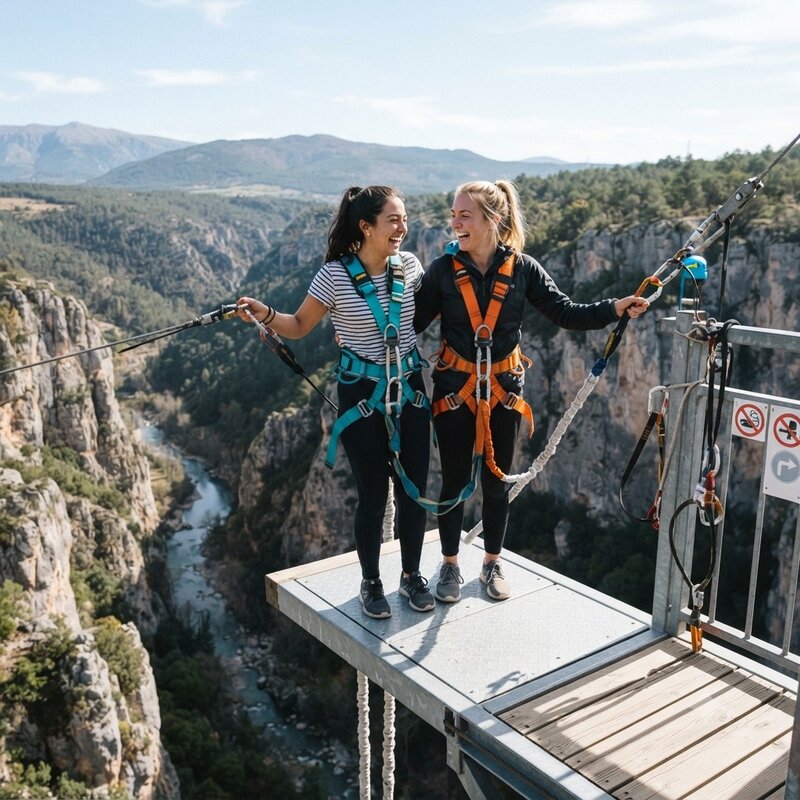
Book only with an operator that follows established safety standards, such as those set by regional bungee associations, since bungee jumping fatalities have occurred almost exclusively at unregulated operations that skip cord weight-matching, equipment inspections, or trained staff. Disclose your exact body weight honestly during check-in rather than rounding down, since the cord's stretch and rebound are calculated precisely for a given weight range, and an inaccurate weight can result in a jumper hitting the ground or water below. Avoid jumping with a full stomach or after drinking alcohol, since the intense g-forces during the rebound can trigger nausea and vomiting, and impaired judgment increases the risk of an unsafe jump. Cross your arms over your chest or hold the harness as instructed during the fall rather than flailing your arms, since uncontrolled arm movement can cause you to hit the platform, cord, or your own body on the way down. Keep your knees slightly bent and your body relaxed at the moment of the dive rather than jumping stiff-legged, since tensed muscles absorb the sudden deceleration force less effectively and increase the chance of strain or whiplash. Disclose any heart conditions, recent injuries, or pregnancy to staff beforehand rather than assuming you're fine, since the sudden deceleration forces involved are strong enough to pose real risk to these specific conditions even in otherwise healthy people.