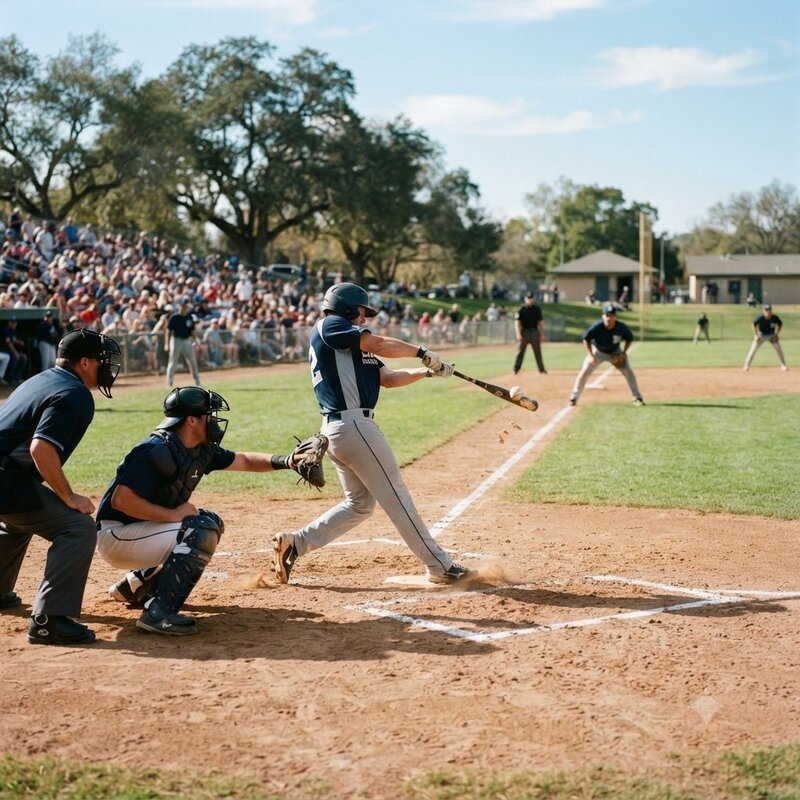
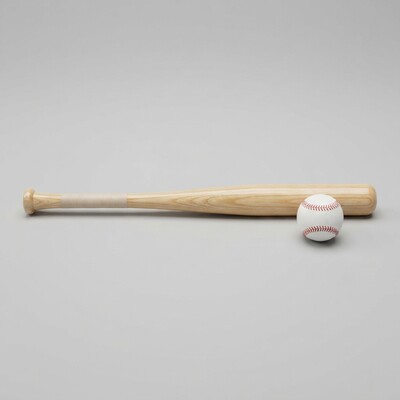
Choose a bat weight you can swing under control rather than the heaviest one available, since a bat too heavy to control slows your swing and makes it harder to hit the ball squarely. Keep your eyes on the ball from the moment it leaves the pitcher's hand until it reaches the bat, since looking away even briefly is one of the most common reasons for a missed or mishit ball. When fielding a ground ball, get your body directly in front of it and bend your knees to bring your glove down to the ground rather than reaching sideways, since a ball that gets past your glove has nothing to stop it if your body was not positioned behind it. Always know how many outs there are and where you would throw the ball before it is hit to you, since hesitating over where to throw after catching the ball often costs a run or an out. Wear a batting helmet whenever you are hitting or on base, since a pitch or a batted ball can move fast enough to cause serious injury even at slower amateur speeds. Warm up your throwing arm gradually with easy short throws before attempting long, hard throws, since throwing at full effort with a cold arm is a common cause of shoulder and elbow injuries.