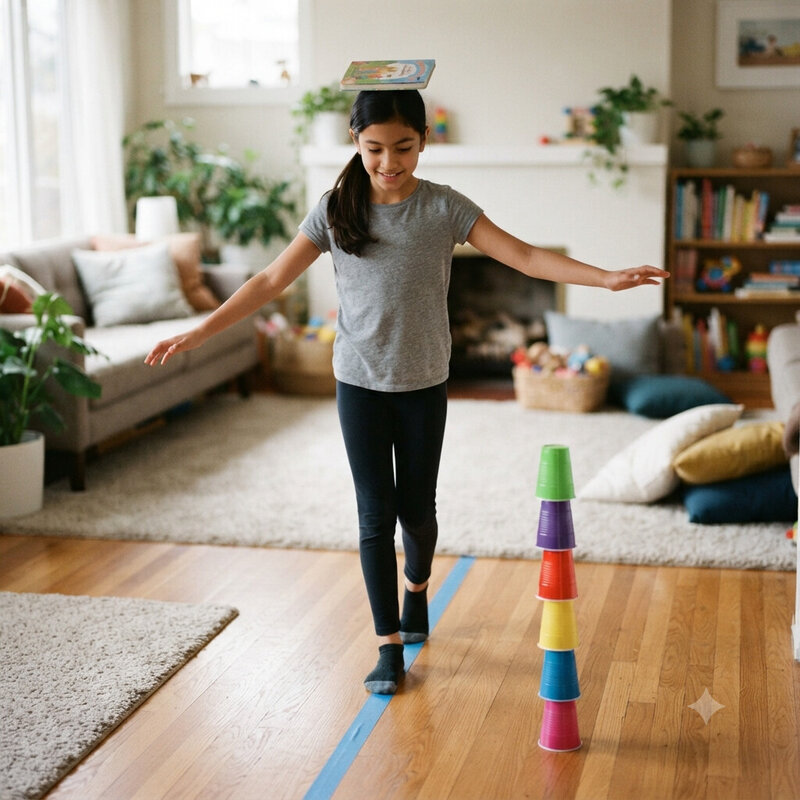
Pick a simple format first, such as standing on one foot, walking heel-to-toe along a line of tape on the floor, or balancing a beanbag on your head while walking, since these give an easy way to measure progress without any special equipment. Play on a soft, flat surface like carpet or grass rather than a hard or uneven one, since balance games naturally involve occasional falls and a forgiving surface reduces the risk of injury. Time each attempt with a stopwatch or count out loud together, since a shared number gives everyone a clear, comparable target to beat rather than a vague sense of who did better. Take turns rather than having everyone balance at once, since watching others attempt the challenge first often reveals mistakes to avoid and builds anticipation. Raise the difficulty gradually, such as closing your eyes, standing on a cushion, or adding a second task like tossing a ball while balancing, since jumping straight to a hard version discourages beginners before they build basic skill. Keep a wall or sturdy piece of furniture within reach for younger children who are still developing balance, since having something to catch themselves on builds confidence to try harder challenges.