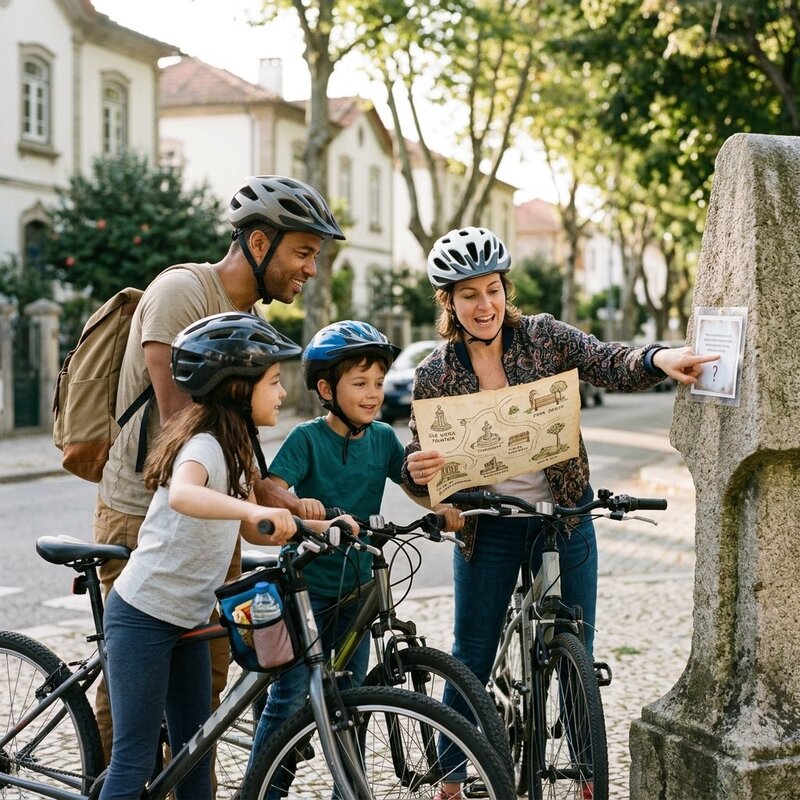
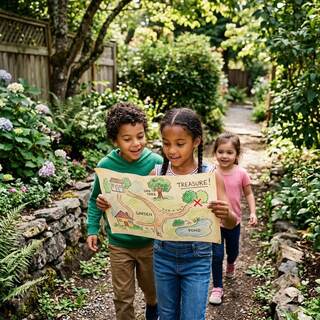
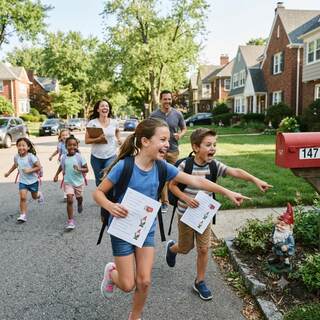
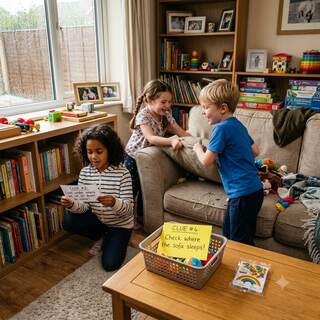
Plan the route on quiet streets, bike paths, or parks rather than busy roads, since young or inexperienced riders following clues need to focus on reading signs and searching, not on watching for traffic. Write clues that describe visible, permanent landmarks like a red mailbox or a specific bench rather than things that could move or disappear, like a parked car or a pile of leaves, since a clue tied to something temporary can leave the whole hunt stuck at one spot. Space checkpoints close enough together that young riders can see the next one is achievable, since long gaps between clues cause discouragement partway through the ride, especially for kids still building cycling stamina. Give each rider or team a copy of the clues or a simple map rather than relying on one person to remember the route, since a single point of failure means the whole group stops if that one rider gets confused or falls behind. Set a clear boundary for how far the hunt can range and remind riders to stay within sight of an adult or a designated meeting point, since the excitement of the hunt easily distracts kids from noticing they've ridden farther than intended. Have a backup plan for a clue that stumps everyone, such as a hint system or a time limit before revealing the answer, since getting stuck on one puzzle can turn what should be a fun ride into a frustrating standstill.