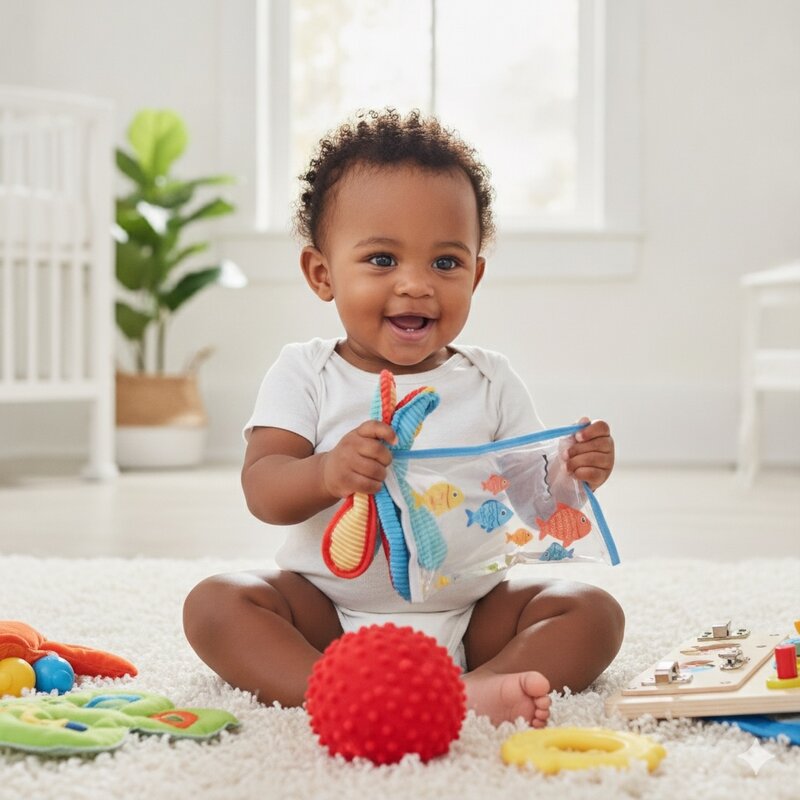
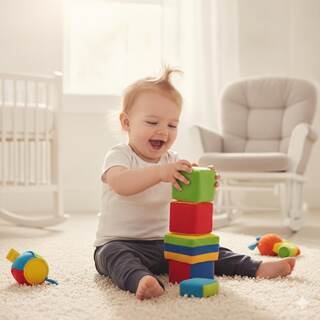
Choose materials with varied textures, such as soft fabric, crinkly paper, smooth wood, or bumpy silicone, since exposing babies to different tactile sensations helps build early neural connections related to touch. Supervise closely at all times, especially with small objects or loose materials, since babies explore everything by putting it in their mouths and choking is a serious risk with anything smaller than a toilet paper roll. Offer one or two sensory materials at a time rather than overwhelming your baby with too many options at once, since a simpler setup helps them focus and fully explore each texture or sensation. Let your baby lead the exploration rather than directing exactly how they should interact with the material, since babies learn best through their own unstructured, curiosity-driven investigation. Include different senses beyond touch when possible, such as gentle sounds, safe scents, or contrasting colors, since combining sensory input helps strengthen overall sensory development rather than focusing on just one channel. Keep sessions short and stop before your baby becomes overstimulated or tired, since signs like turning away, fussiness, or rubbing their eyes mean it is time to wrap up rather than push further.