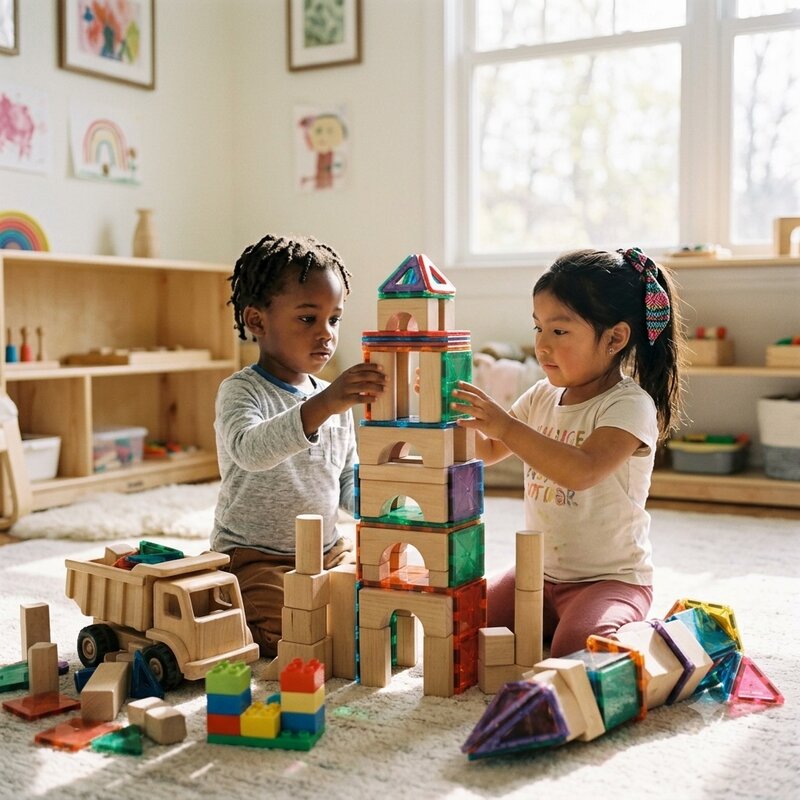
Build a wide, flat base before stacking upward rather than starting with a narrow tower, since a broad foundation distributes weight evenly and keeps the structure from toppling as it gets taller. Alternate the direction of each layer, like bricklaying, rather than stacking blocks directly on top of one another, since staggered joints lock pieces together and make the structure far sturdier than a stack with straight vertical seams. Sort blocks by size or shape into separate piles before building rather than digging through one big bin mid-project, since constant searching breaks a child's focus and turns building into frustration rather than creative play. Let a young child knock down their own finished structure rather than stepping in to preserve it, since demolishing what they built is often as satisfying as the building itself and teaches that mistakes and starting over are a normal part of play. Match the block size to the child's age, using large, chunky blocks for toddlers and smaller, more detailed sets for older kids, since blocks that are too small are a choking hazard for children under three, while oversized blocks bore children who are ready for finer motor challenges. Store blocks in open bins rather than closed boxes with lids, since a young child needs to see the pieces to plan a build, and a container that hides its contents gets ignored in favor of toys that are visible.