Suggest a new activity

This site is protected by reCAPTCHA and the Google Privacy Policy and Terms of Service apply.

Report a bug

Optional, 1 image up to 5 MB.

This site is protected by reCAPTCHA and the Google Privacy Policy and Terms of Service apply.

Report an error in this activity

This site is protected by reCAPTCHA and the Google Privacy Policy and Terms of Service apply.

Paper Airplane Engineering

Paper Airplane Engineering

Min number of participants 1
Age 8+ yrs.
Safety support by adult Not required
Min duration 20 min.
Cost None (Free)
Environment Indoor / Outdoor

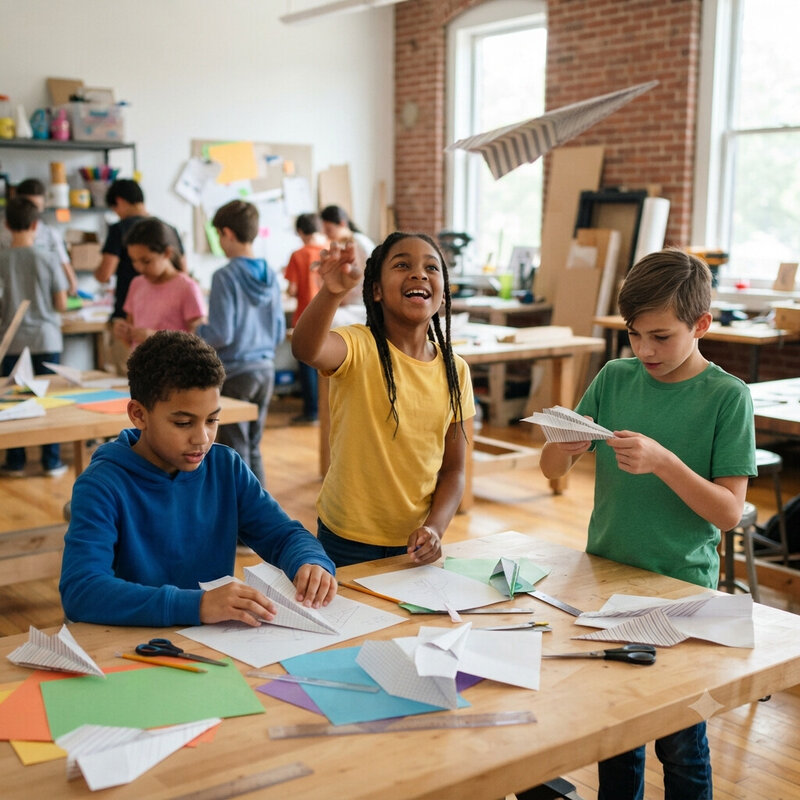
Fold, test, and tweak different paper airplane designs to see which one flies farthest, fastest, or does the coolest loops — a hands-on way to learn about balance, weight, and aerodynamics.

The Essentials

Rules

  • Make every fold crisp and precisely aligned edge-to-edge before creasing, since even a slightly off fold on one side unbalances the plane and sends it curving instead of flying straight.
  • Crease each fold firmly with a fingernail or ruler after positioning it correctly, since a soft, rounded crease lets the paper spring back and lose its shape mid-flight.
  • Keep both wings symmetrical in size and angle, since asymmetry is the single biggest cause of a plane veering left or right instead of flying straight.
  • Use standard printer paper rather than heavier cardstock or lighter tissue paper for your first designs, since printer paper offers the balance of rigidity and light weight most classic paper airplane designs are built around.

Tips

  • Test-fly each design several times and adjust the wingtips slightly (bending them up or down) to correct for drift, since small trim adjustments after folding often matter more than the fold pattern itself.
  • Throw the plane level and with a firm, steady motion rather than an upward toss, since launch angle affects flight path as much as the fold quality does.
  • Experiment with different fold patterns (dart-style for distance, glider-style for hang time) rather than sticking to one design, since different shapes are optimized for different goals like speed, distance, or airtime.
  • Add a small strip of tape to reinforce the nose if you're throwing hard for distance, since repeated hard throws can cause the nose fold to loosen and change the plane's balance over time.
Activities

Similar activities (see all)

Report an error in this activity

This site is protected by reCAPTCHA and the Google Privacy Policy and Terms of Service apply.

Magic Tricks

Magic Tricks

Learn sleight-of-hand, card tricks, and simple illusions to perform for family and friends — practising magic sharpens dexterity, memory, and showmanship while delivering the thrill of genuinely fooling an audience.

Report an error in this activity

This site is protected by reCAPTCHA and the Google Privacy Policy and Terms of Service apply.

Straw Rocket Building

Straw Rocket Building

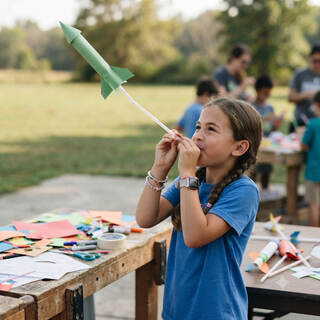
Build a mini rocket from paper and a straw, then blow it into the air to see how far it flies — a hands-on science craft testing aerodynamics through trial, error, and redesign.

Report an error in this activity

This site is protected by reCAPTCHA and the Google Privacy Policy and Terms of Service apply.

Vinyl Record Collecting

Vinyl Record Collecting

Hunt for rare pressings at record fairs and charity shops, clean them up and play them on a warm turntable — building a personal music library with depth, history, and unmistakable analogue warmth.