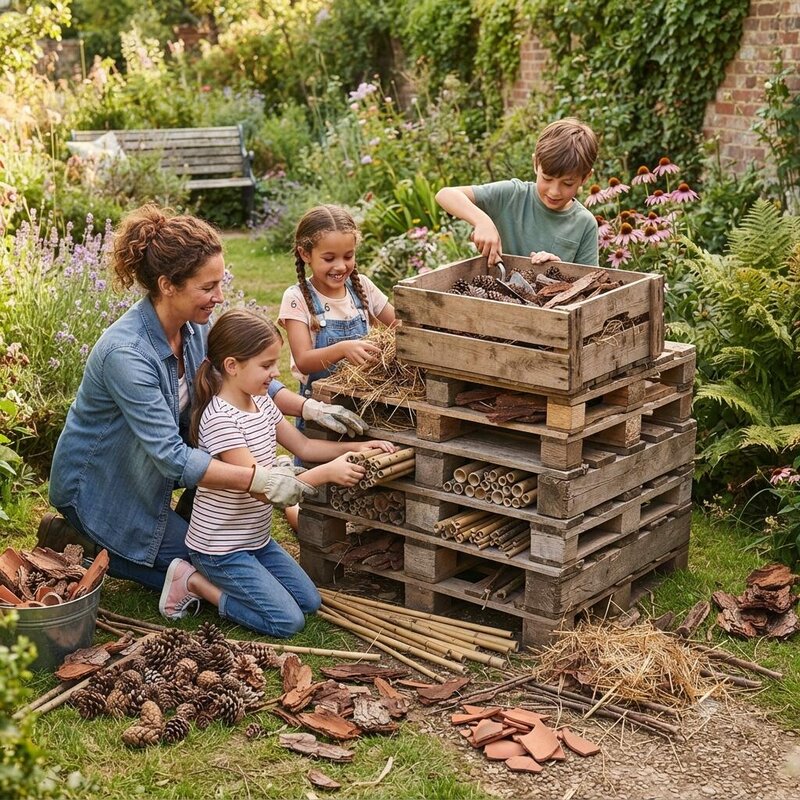
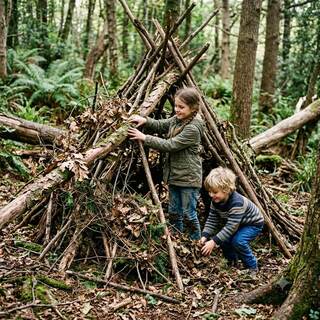
Use only untreated, natural materials like bamboo canes, dry twigs, pine cones, and bark rather than painted or chemically treated wood, since pesticide or varnish residue can harm or kill the very insects the hotel is meant to attract. Fill different sections with different materials rather than one uniform filling, since separate species need distinct spaces: hollow stems and drilled wood blocks suit solitary bees, while loose bark and dry leaves suit beetles and woodlice. Pack materials tightly enough that they don't fall out but loosely enough to leave small gaps, since insects need snug crevices to shelter in, and either overly loose or overly compacted material fails to provide usable habitat. Position the hotel in a sheltered, partly sunny spot facing southeast rather than a fully shaded or exposed area, since most beneficial insects need morning warmth to become active but also protection from harsh afternoon sun and driving rain. Mount the hotel at least 30 centimeters off the ground on a stable stand or wall bracket rather than leaving it directly on soil, since ground contact invites damp rot and gives easier access to predators like mice. Leave the hotel undisturbed once insects move in, checking only occasionally from a distance, since disturbing nesting bees or hibernating insects can cause them to abandon the site entirely.