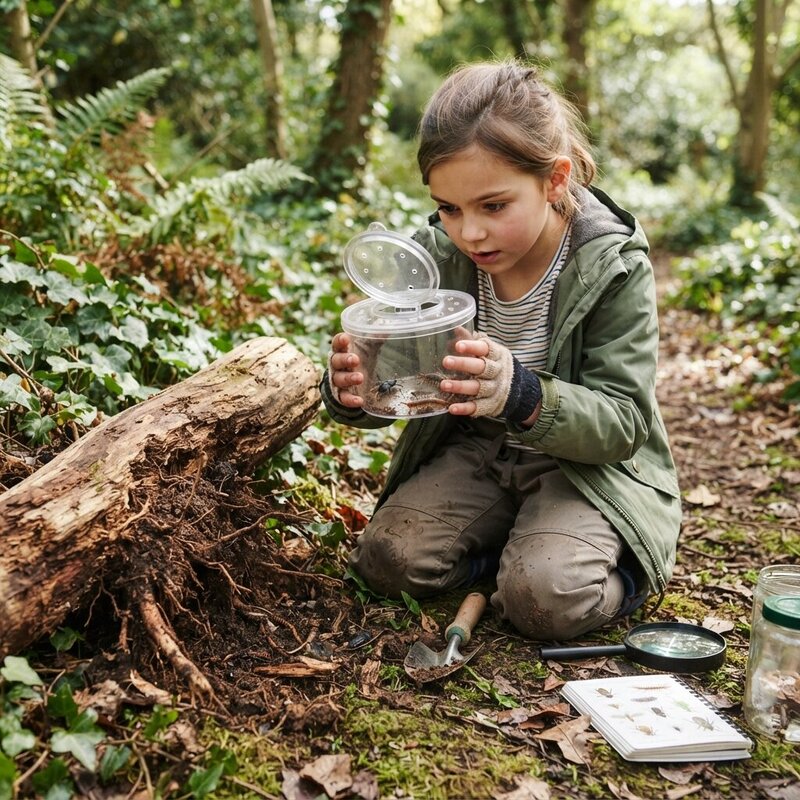
Use a clear jar with air holes punched in the lid rather than a sealed container, since insects suffocate within minutes in an airtight space, and even a short collecting trip can kill specimens you meant to release. Add a damp paper towel or a few blades of grass to the jar rather than leaving it bare, since most insects need some humidity and food to survive more than an hour or two in captivity. Handle insects gently by letting them walk onto your hand or a leaf rather than pinching or squeezing them, since many species are fragile enough that a firm grip crushes legs, wings, or antennae permanently. Release insects within the same day and near where you found them rather than keeping them long-term or relocating them far away, since most insects are adapted to a specific local habitat and won't survive being moved to unfamiliar terrain. Avoid touching caterpillars with spines or brightly colored insects like some beetles and true bugs without checking first, since several common species can sting or release irritating chemicals as a defense mechanism. Look under logs, rocks, and leaf litter rather than only searching in open grass, since most insect diversity hides in these damp, sheltered microhabitats rather than out in plain sight.