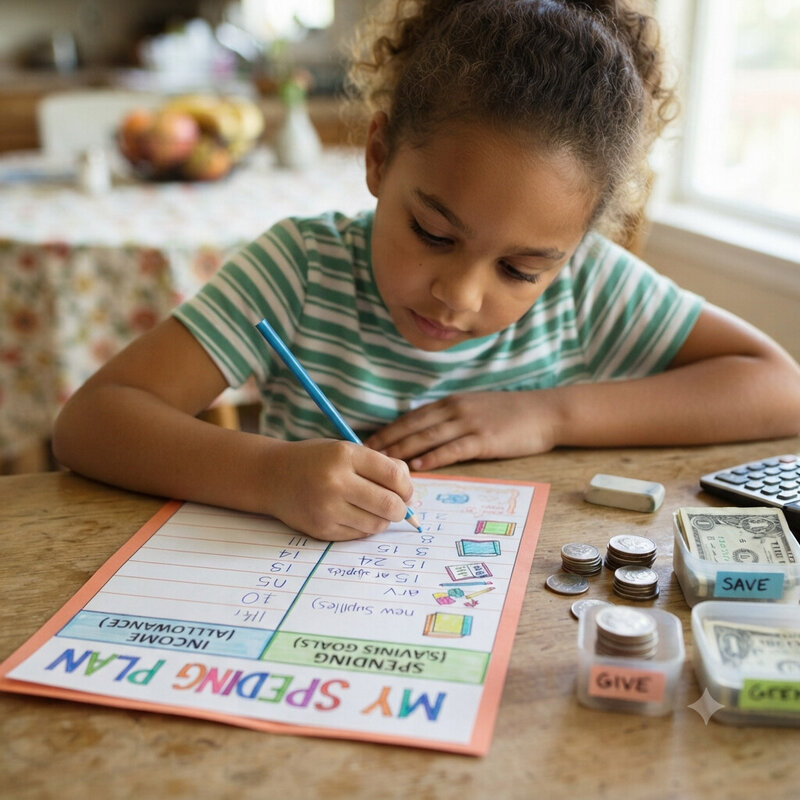
Use real, physical money or a simple visual system rather than jumping straight to apps or spreadsheets, since young children understand budgeting far better when they can physically see and move coins or bills between labeled jars or envelopes than through abstract numbers on a screen. Break money into simple categories like spend, save, and give rather than a detailed adult-style budget, since three or four broad buckets teach the core habit of dividing money on purpose without overwhelming a child who is just learning the concept. Let kids make small spending mistakes with their own money rather than stepping in to prevent every bad purchase, since realizing on their own that a cheap toy broke in a day teaches the value of saving far more effectively than a lecture would. Set a savings goal for something the child actually wants rather than an abstract amount, since working toward a specific toy or outing gives the exercise of saving real, tangible meaning instead of being just a number to hit. Review the budget together on a regular schedule, like weekly, rather than only when money runs out, since a consistent check-in normalizes tracking money as a routine habit rather than something that only happens during a crisis. Match the complexity of the system to the child's age rather than using one plan for years, since a system that fits a six-year-old will feel babyish and disengaging to the same child at eleven, and revisiting the setup as they grow keeps them invested in it.