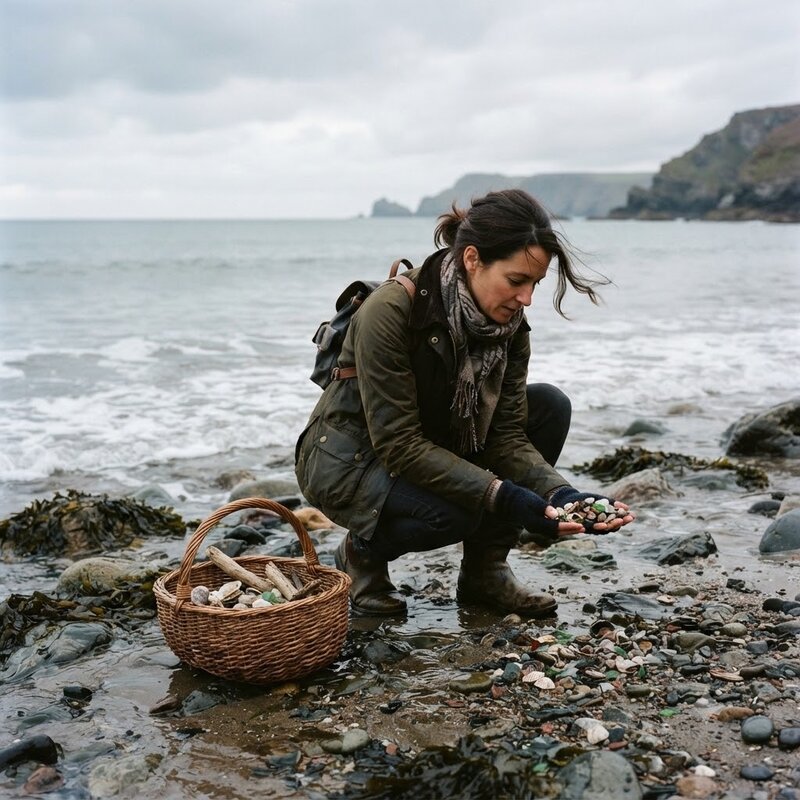
Check the tide schedule and go during the two hours around low tide, since a much larger stretch of shoreline is exposed then than at any other time, revealing items that stay underwater the rest of the day. Walk along the high tide line, the band of seaweed, shells, and debris left on the sand, since this natural line marks where the strongest waves have pushed material ashore and concentrates the most interesting finds. Wear closed-toe shoes rather than sandals, since broken shells, sharp rocks, and hidden glass are common in the wet sand and easy to step on without noticing. Leave live animals such as crabs, starfish, and shellfish where you find them, since removing living creatures from the shore disrupts the ecosystem and many coastal areas have specific rules against it. Look under and around larger rocks and in tide pools rather than only scanning open sand, since interesting shells and sea glass often collect in these sheltered spots instead of the open beach. Rinse and dry your finds before storing them, since sand and salt residue left on shells and glass can attract insects or cause a musty smell over time.