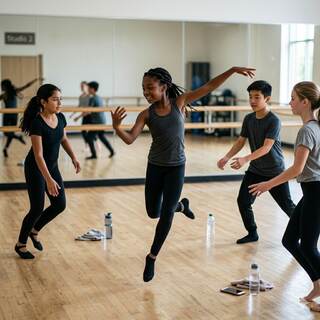
Choose a starter style with a simple, forgiving rhythm, such as the box step in waltz or the basic side-to-side in foxtrot, since these give you a repeatable pattern to build confidence before tackling faster or more intricate styles. Stand with a light, upright posture and a slight forward frame toward your partner, since slouching or leaning back throws off both partners' balance and makes leading and following harder. Whoever leads should give clear, gentle pressure through the hand and frame rather than pulling or pushing hard, since clear but soft signals let the follower anticipate the next step instead of being yanked into it. Whoever follows should stay light on their feet and resist the urge to anticipate steps before they are led, since guessing ahead causes collisions and missed timing. Practice basic steps slowly without music first, then add music once the pattern feels natural, since matching an unfamiliar step to a beat at the same time you are learning it is much harder than learning the step first. Keep your eyes softly on your partner rather than looking down at your feet, since looking down breaks the frame and makes it harder to feel your partner's lead.