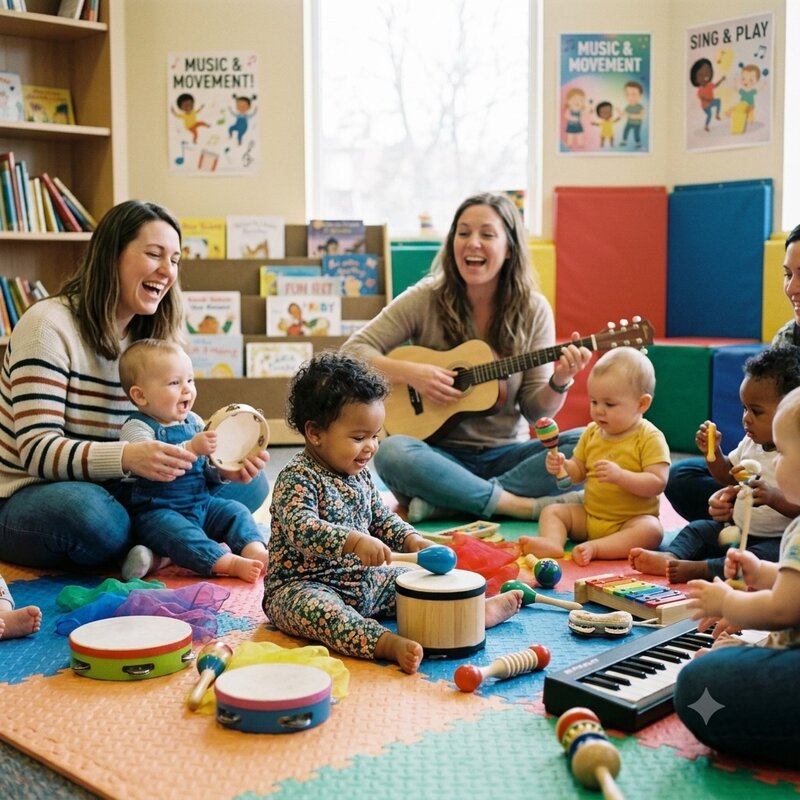
Offer simple, baby-safe instruments like soft rattles, shakers, or small drums, since these let your baby experiment with cause and effect by making sounds through their own movements. Sing and hum regularly during everyday routines like diaper changes or bath time, since babies respond strongly to the human voice and repeated exposure helps them recognize melodies and rhythms over time. Play a variety of musical styles rather than sticking to just one genre, since exposing your baby to different tempos, instruments, and moods helps build a broader foundation for musical understanding. Move your baby's body gently to the beat, such as bouncing them on your knee or swaying while holding them, since physical movement paired with music helps babies feel rhythm before they can create it themselves. Keep the volume moderate and avoid sudden loud sounds, since a baby's hearing is more sensitive than an adult's and loud or jarring noises can be overwhelming or even harmful. Follow your baby's reactions to guide the session, continuing activities that bring smiles or engaged attention and pausing or switching things up when they seem overstimulated or disinterested.