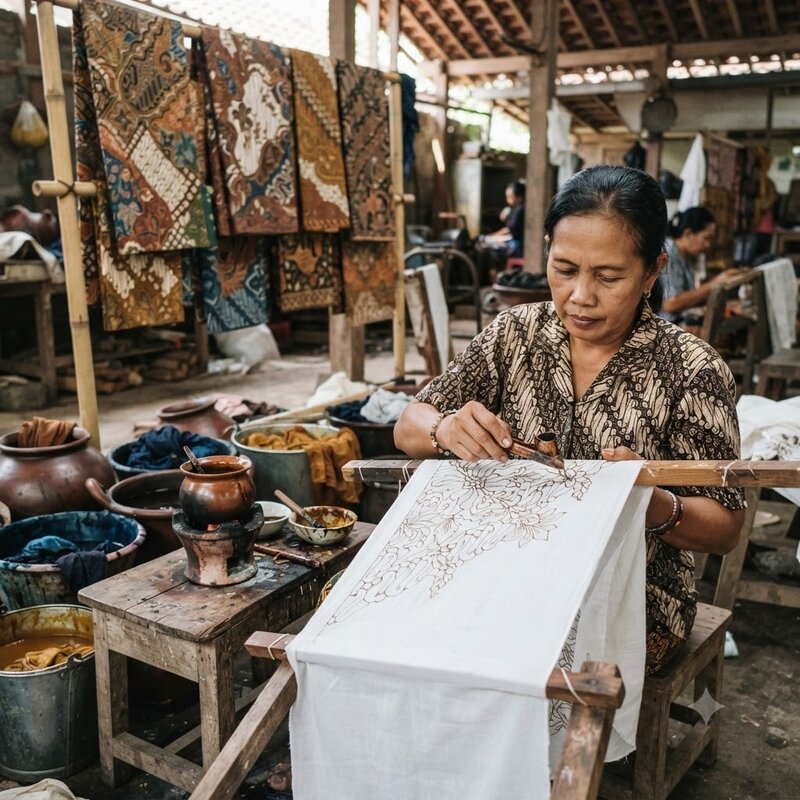
Use natural fiber fabric like cotton or silk rather than synthetic blends, since wax adheres poorly to synthetic fibers and dye will not absorb into them evenly. Wash and dry the fabric before starting to remove any factory finish, since sizing and starches on new fabric block both the wax and the dye from properly bonding to the fibers. Keep the wax at the right temperature, hot enough to soak through the fabric and appear translucent on both sides, since wax that is too cool sits on the surface and cracks off before dyeing, letting dye bleed into areas meant to stay protected. Apply wax to any area you want to keep the current color, since wax acts as a barrier that blocks dye from penetrating the fabric underneath it. Work from the lightest dye color to the darkest, waxing over each color before adding the next, since dyeing light to dark lets each new dye layer only affect the unwaxed areas without muddying colors already set. Remove the wax at the end by boiling the fabric in water or ironing it between layers of paper, since wax left in the fabric keeps it stiff and prevents the dye colors from showing their true, vivid tone.