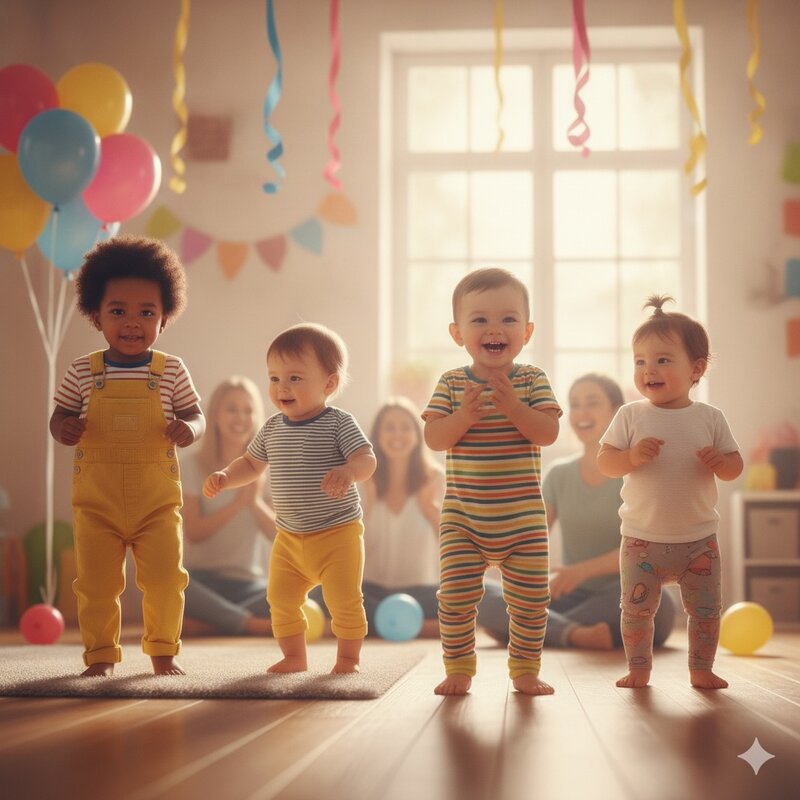
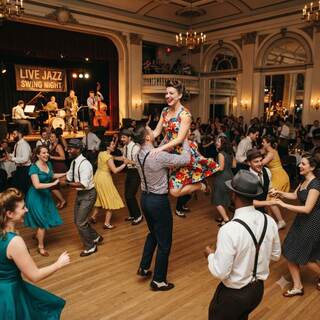
Clear a safe, open space free of sharp furniture corners or hazards, since babies move unpredictably and you want room to hold and sway with them without bumping into anything. Choose upbeat, simple music with a clear, steady beat, since babies respond well to predictable rhythms they can feel in their bodies even before they can dance on their own. Hold your baby securely and move gently to the music, such as swaying side to side, bouncing softly, or lifting them for a moment, since this lets them experience rhythm through your movements before they can control their own. Let older babies who can sit or stand hold onto sturdy furniture or your hands while they bounce or sway on their own, since this builds coordination and confidence without needing you to support their full weight. Vary the tempo and style of the music throughout the session, since exposing babies to different rhythms and energy levels keeps them engaged and supports broader musical development. Watch for signs of tiredness or overstimulation, such as rubbing eyes or turning away, and wind the session down when they appear, since babies have limited stamina for stimulating activities like dancing.