Suggest a new activity

This site is protected by reCAPTCHA and the Google Privacy Policy and Terms of Service apply.

Report a bug

Optional, 1 image up to 5 MB.

This site is protected by reCAPTCHA and the Google Privacy Policy and Terms of Service apply.

Report an error in this activity

This site is protected by reCAPTCHA and the Google Privacy Policy and Terms of Service apply.

Kintsugi

Kintsugi

Min number of participants 1
Age 14+ yrs.
Safety support by adult Recommended
Min duration 1 h
Cost Medium
Environment Indoor / Outdoor

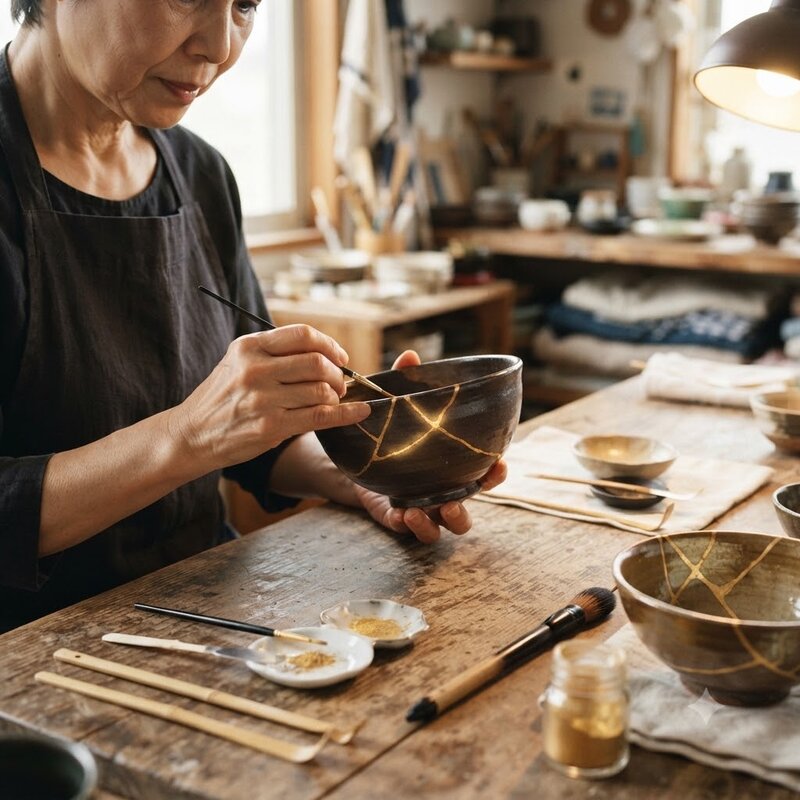
Japanese art of repairing broken pottery with gold or silver lacquer — a philosophy that embraces imperfection, turning cracks into golden veins of beauty.


The Essentials

Steps

  1. Gather the broken pieces of your ceramic and dry-fit them together first to confirm how they align.
  2. Clean each edge with rubbing alcohol to remove dust and oils so the adhesive bonds properly.
  3. Mix a food-safe epoxy or use traditional urushi lacquer, then apply a thin layer to each broken edge.
  4. Press the pieces together and hold or tape them in place until the adhesive sets.
  5. Once fully cured, mix a small amount of gold, silver, or brass mica powder into a clear top coat.
  6. Paint the gold mixture carefully along every visible seam, then let it cure completely before using the piece again.

Tips

  • Use a kit made for beginners on your first attempt, since traditional urushi lacquer can trigger skin reactions and needs careful handling.
  • Work over a tray or newspaper, since gold powder and epoxy can be messy and hard to clean off surfaces.
  • Don't rush the drying and curing times; disturbing the piece too early is the most common cause of repairs failing.
  • Choose food-safe, non-toxic epoxy if you plan to eat or drink from the repaired piece.
  • Embrace irregular cracks and gaps rather than hiding them; the visible gold seams are the whole point of kintsugi.
Activities

Similar activities (see all)

Report an error in this activity

This site is protected by reCAPTCHA and the Google Privacy Policy and Terms of Service apply.

18+

This activity is intended for adults. Please confirm that you are 18 years of age or older to see such activities.

Home Brewing

Home Brewing

Malt grains, add hops, ferment with yeast, and bottle-condition your own beer or cider at home — home brewing is an applied chemistry experiment that rewards patience with a finished drink that precisely reflects your own taste and creativity.

Report an error in this activity

This site is protected by reCAPTCHA and the Google Privacy Policy and Terms of Service apply.

Natural Dyeing

Natural Dyeing

Prepare plant-based dye baths from onion skins, indigo leaves, walnuts, or madder root and immerse fabric or yarn to achieve rich, earthy tones that shift as you experiment with mordants and layering.

Report an error in this activity

This site is protected by reCAPTCHA and the Google Privacy Policy and Terms of Service apply.

Family Recipe Book

Family Recipe Book

Interview grandparents and relatives for their favourite recipes, write them up with drawings, and bind them into a family cookbook — a heritage project that preserves stories alongside ingredients and becomes a lifelong keepsake.