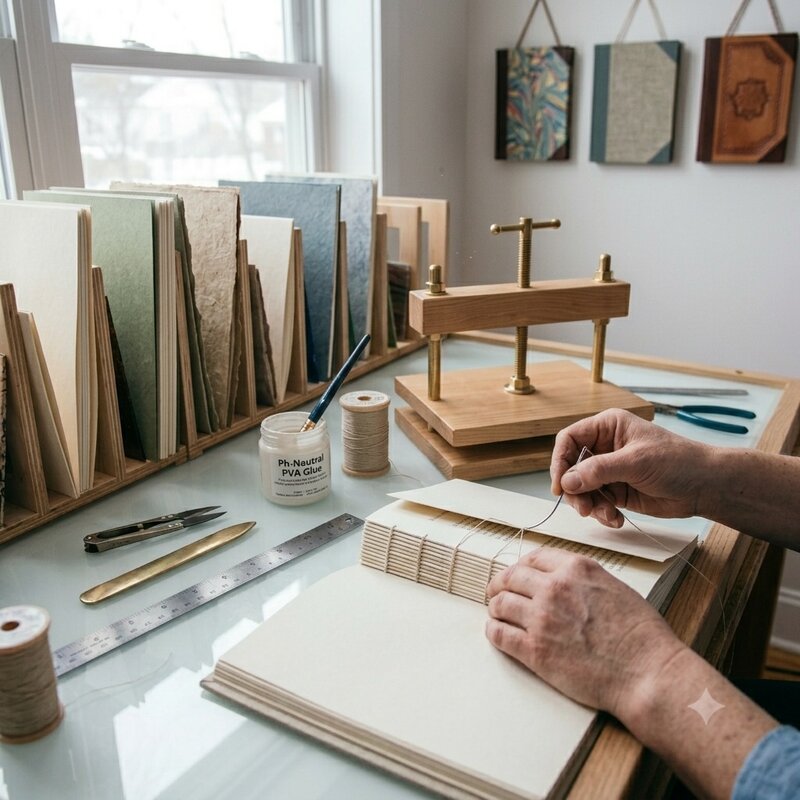
Fold and group your paper into small sections called signatures rather than trying to sew or glue one giant stack, since a thick single stack cannot bend properly at the spine and quickly cracks or falls apart, while multiple thin signatures flex naturally when the book opens. Score paper before folding along any line thicker than standard printer paper, since folding without scoring crushes the fibers unevenly and produces a rough, cracked crease instead of a clean fold. Use a bone folder or similarly hard, smooth tool to crease every fold fully, since folds made only with fingers are inconsistent and leave pages that don't lie flat once bound. Keep binding thread taut but not overly tight while sewing signatures together, since thread pulled too tight puckers and distorts the paper, while thread left too loose leaves pages wobbly and prone to shifting. Let any glue used in the binding process dry completely under light, even pressure, such as being pressed flat under heavy books, since a book closed or handled before the glue cures often warps permanently or delaminates later. Test your paper grain direction before starting a project, since folding against the grain resists rather than assists the fold and makes pages naturally want to spring back open instead of lying flat.