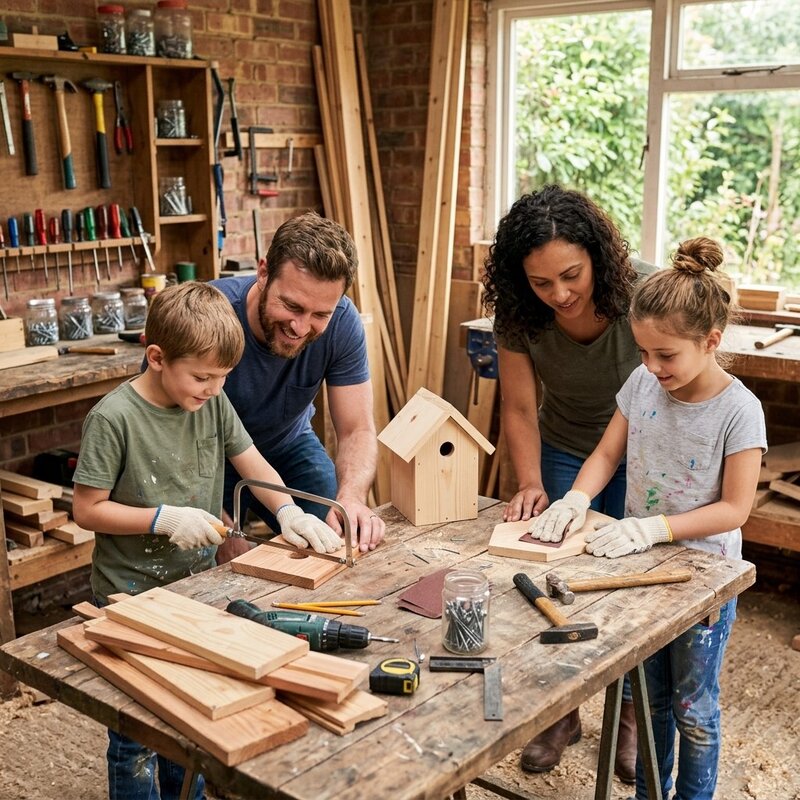
Match the entrance hole size to the bird species you want to attract, since a hole that is too large lets in predators and competing larger birds, while one that is too small keeps out the very species you built the house for. Use untreated wood rather than pressure-treated lumber or painted scraps, since the chemicals in treated wood and many paints can be toxic to nesting birds and their chicks over time. Drill a few small drainage holes in the floor and ventilation gaps near the roofline, since rainwater that pools inside can drown chicks and poor airflow can overheat the nest on hot days. Skip the front perch below the entrance hole, since perches make it easier for predators like squirrels and larger birds to reach in and attack eggs or chicks, while most cavity-nesting birds don't need one to enter. Mount the birdhouse at the height and orientation appropriate for your target species, and angle the entrance slightly downward and away from prevailing winds and direct afternoon sun, since a poorly placed house often goes completely unused even if it's well built. Clean out the birdhouse once a year after the nesting season ends, since old nesting material left inside can harbor parasites and mites that make the house less appealing or unsafe for the next year's occupants.