Suggest a new activity

This site is protected by reCAPTCHA and the Google Privacy Policy and Terms of Service apply.

Report a bug

Optional, 1 image up to 5 MB.

This site is protected by reCAPTCHA and the Google Privacy Policy and Terms of Service apply.

Report an error in this activity

This site is protected by reCAPTCHA and the Google Privacy Policy and Terms of Service apply.

Oil Painting

Oil Painting

Min number of participants 1
Age 10+ yrs.
Safety support by adult Not required
Min duration 1 h
Cost Low
Environment Indoor / Outdoor

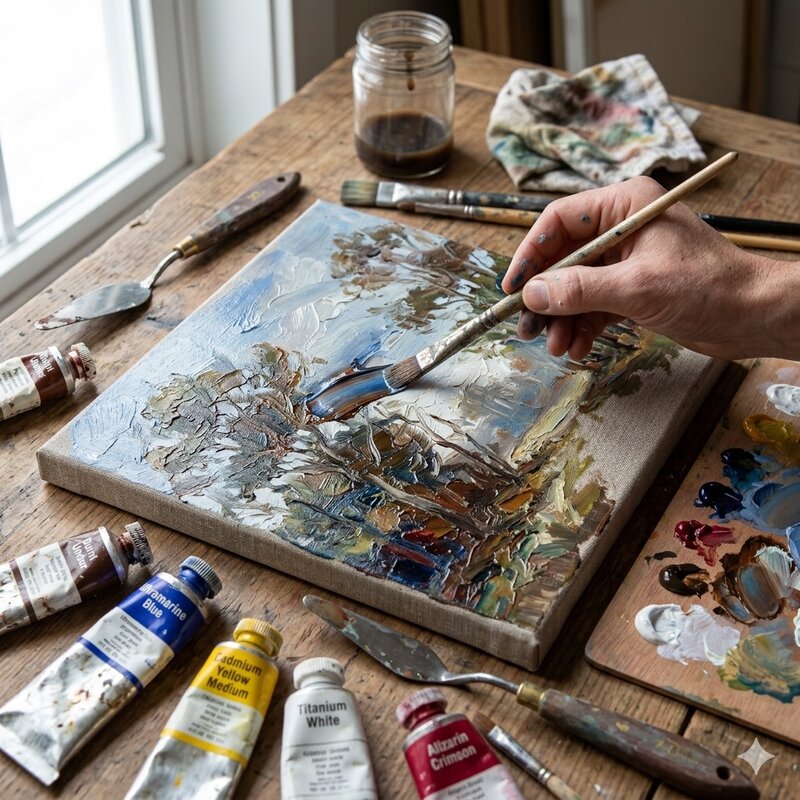
Apply slow-drying oil-based pigments to canvas in layers, blending colours and building texture over days or weeks — oil painting rewards patient observation and deliberate mark-making, offering rich depth and reworkability that no other medium matches.
The Essentials

Rules

  • Follow the "fat over lean" principle when layering paint (each layer should have more oil than the one beneath it), since violating this causes upper layers to crack as they dry faster than the oil-rich layers underneath.
  • Never paint in a completely unventilated space, since solvents like turpentine and mineral spirits release fumes that are harmful with prolonged exposure.
  • Store oily rags in a sealed metal container, never balled up in a trash can, since oil-soaked rags can spontaneously combust as the oil oxidizes and generates heat.
  • Let each layer dry fully according to your paint's specifications before adding solvent-heavy layers on top, since rushing this process undermines the structural integrity of the finished painting.

Tips

  • Work from a limited palette (a handful of core colors plus white) rather than buying every premade color, since mixing your own colors builds a much stronger understanding of color theory and typically produces more harmonious paintings.
  • Block in large shapes and values first before refining details, since starting with fine detail makes it much harder to adjust the overall composition later.
  • Use a palette knife for mixing paint rather than your brushes, since this keeps your brushes cleaner for longer and gives you more control over paint consistency.
  • Clean brushes immediately after each session with appropriate solvent, then soap and water, since dried oil paint is very difficult to remove and can permanently ruin brush bristles.
  • Keep a "wet palette" area organized by color family, since disorganized color mixing wastes paint and makes it harder to achieve consistent color mixes across a session.
Activities

Similar activities (see all)

Report an error in this activity

This site is protected by reCAPTCHA and the Google Privacy Policy and Terms of Service apply.

Recipe Book Creating

Recipe Book Creating

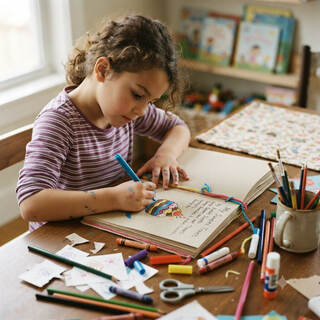
Collect your favorite snack and treat ideas and turn them into your very own recipe book — draw pictures, write steps in your own words, and build a collection you'll be proud of. No grown-up required, just paper and imagination!

Report an error in this activity

This site is protected by reCAPTCHA and the Google Privacy Policy and Terms of Service apply.

Animation

Animation

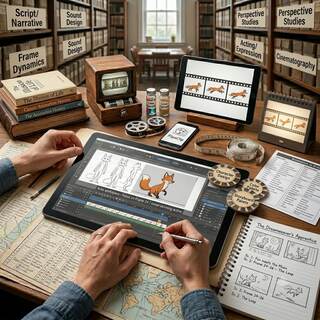
Bring drawings to life frame by frame using free tools like FlipaClip or Krita — animation merges artistic skill with storytelling, producing short films that exist nowhere else but in your imagination.

Report an error in this activity

This site is protected by reCAPTCHA and the Google Privacy Policy and Terms of Service apply.

Newspaper Hat Making

Newspaper Hat Making

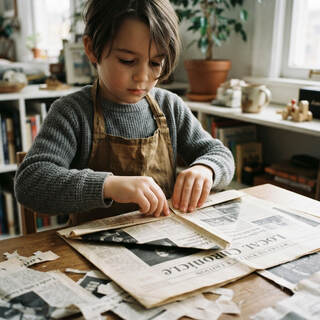
Fold an old newspaper into a pirate, chef, or soldier hat using just your hands — a quick paper-folding craft that turns yesterday's news into imaginative headwear for solo pretend play at home.