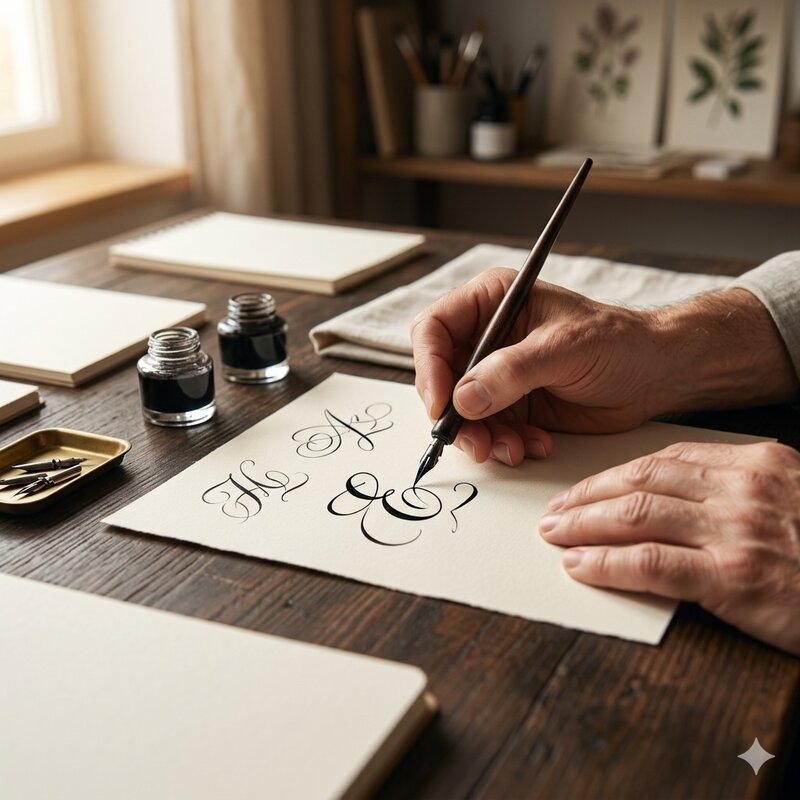
Choose a broad-edge or pointed pen (or a brush pen for beginners) and hold it at a consistent angle, usually around 45 degrees to the writing line, throughout each letter. Practice basic strokes first — straight lines, curves, and ovals — before attempting full letterforms, since consistent strokes are the foundation of legible lettering. Apply light pressure on upstrokes and firmer pressure on downstrokes with a flexible nib to create the classic thick-and-thin contrast, or keep pressure even if using a fixed-width tool like a brush pen. Work slowly and keep your wrist relatively still, moving your whole arm for larger strokes rather than just your fingers. Practice on guideline paper to keep letter height and slant consistent, and expect your hand to tire quickly at first — short, regular practice sessions build muscle memory faster than long, infrequent ones.