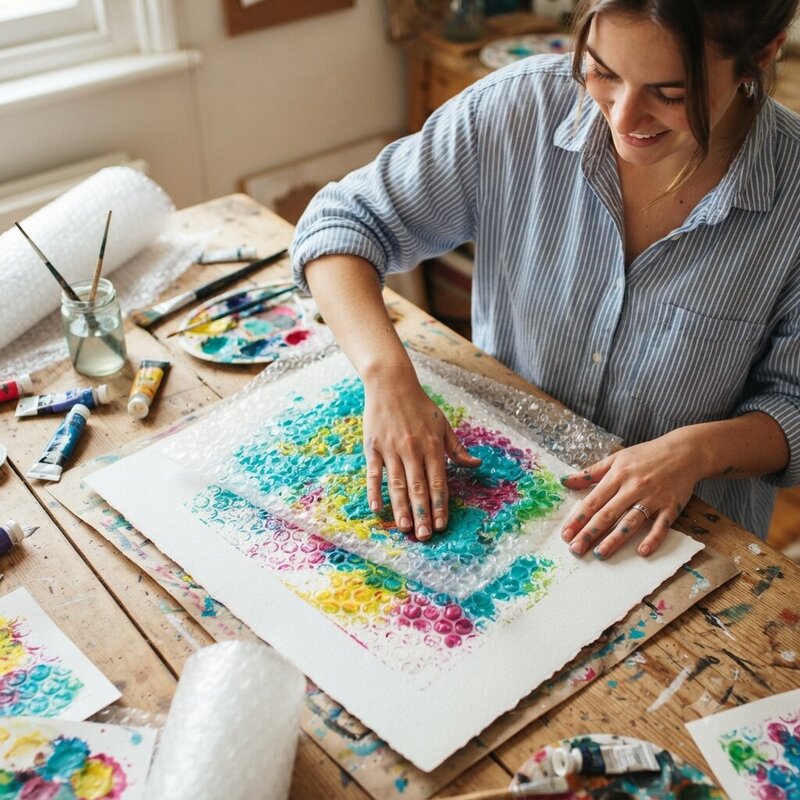
Use bubble wrap with large bubbles rather than the small, tightly packed kind, since large bubbles print a much clearer, more distinct texture on paper, while small bubbles tend to blur together into a muddy pattern. Apply paint with a roller or wide brush rather than pouring it directly onto the bubble wrap, since a roller coats just the raised bumps evenly, while poured paint pools in the gaps between bubbles and produces a blotchy, uneven print. Press down firmly and evenly across the whole sheet rather than in a few random spots, since uneven pressure leaves parts of the design faint or missing entirely, and firm, even pressure transfers a consistent texture across the full print. Lift the bubble wrap straight up in one motion rather than peeling it off at an angle, since dragging or peeling smears the wet paint and blurs the crisp bubble texture that makes this technique distinctive. Tape the bubble wrap to a table or board bubble-side up before painting rather than working with loose, shifting plastic, since bubble wrap slides easily once wet with paint, and any movement during pressing ruins the print's alignment. Reuse the same piece of bubble wrap for multiple colors by rinsing and drying it between uses, since bubble wrap holds its shape well and produces several clean prints before the bubbles start to flatten from repeated pressing.