Beekeeping
Safety warning
This activity is potentially dangerous and can result in serious injury or death. You take part solely at your own risk: honestly assess your health and abilities, use proper safety equipment, follow the guidance of qualified professionals and comply with local laws.
| Min number of participants | 1 |
| Age | 16+ yrs. |
| Safety support by adult | Recommended |
| Min duration | 30 min. |
| Cost | Medium |
| Environment | Outdoor |
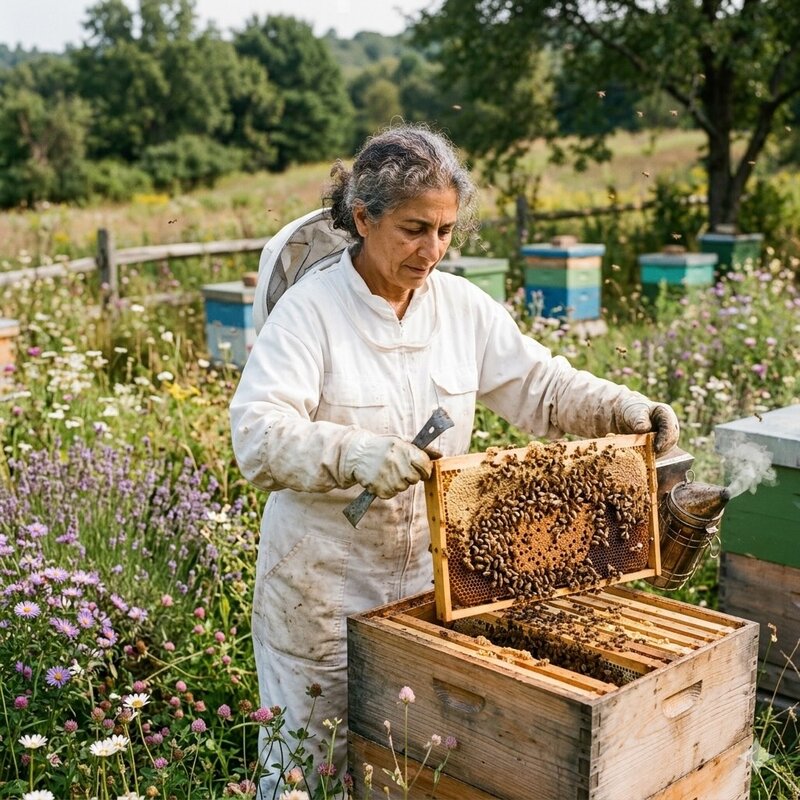
Tend a colony of honeybees in wooden hives, managing their health through the seasons and harvesting honey — beekeeping combines biology, patient observation, and gentle hands-on care in a hobby that also benefits local ecosystems and wildflowers.