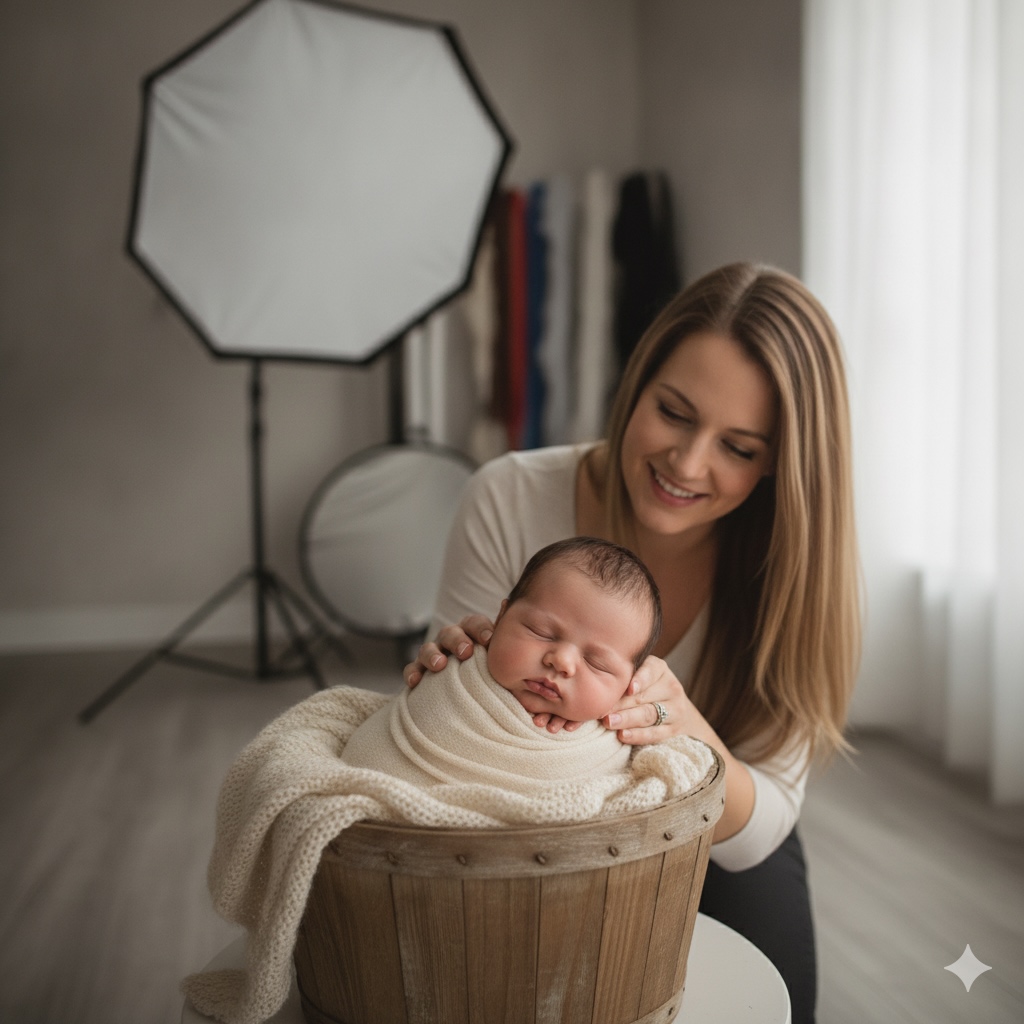
Plan the session around your baby's natural schedule, ideally right after a nap and feeding, since a well-rested, well-fed baby is far more likely to cooperate and smile than a tired or hungry one. Use natural, soft light near a window rather than harsh overhead lighting or direct flash, since gentle light is easier on a baby's eyes and produces more flattering, natural-looking photos. Keep the space warm and comfortable if you plan to photograph your baby with minimal clothing, since babies can get cold quickly and a chilly baby will not settle for photos. Have a helper nearby to make sounds, hold props steady, or soothe your baby between shots, since this frees you up to focus on the camera and composition rather than juggling everything alone. Take far more photos than you think you need, since babies change expressions constantly and only a fraction of shots will capture the natural, candid moments you are hoping for. Keep sessions short, generally under thirty minutes at a time, and watch for signs of fussiness or overtiredness, since pushing past your baby's limit usually produces more crying than smiling.